Sourced fact
The News
German authorities announced the evacuation of over three thousand people from Cologne due to the discovery of a World War II bomb near the Rhine River. The authorities stated that the one-ton bomb was discovered due to the low water levels in the river. The Rhine River and the main highway (Autobahn) were temporarily closed during the evacuation process. The disposal team conducted a controlled detonation of the bomb after transporting it to a safe site, where it was placed in a hole and covered with 60 tons of sand.
In another development, reports indicate that the railway between Hanover and Berlin will be closed for 14 months due to renovation work. The work will include the renewal of infrastructure and tracks over a distance of 227 kilometers, leading to delays of approximately 80 minutes for trains traveling between Hanover and Berlin. Deutsche Bahn officials stated that trains will be rerouted through Braunschweig and Magdeburg.
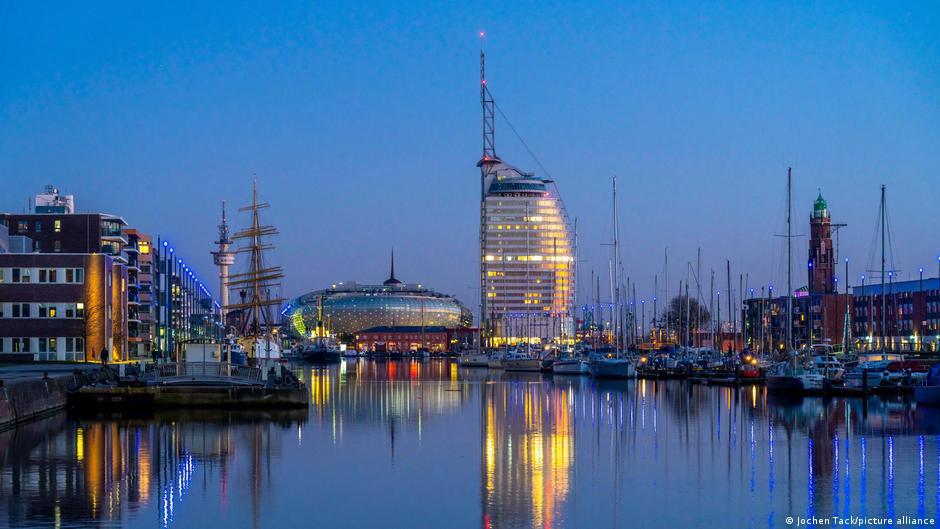
On another note, the German government announced plans to develop the port of Bremerhaven to become a military deployment center in case of a NATO attack. German Defense Minister Boris Pistorius signed a memorandum of understanding to convert the port into a military deployment center at a cost of 1.5 billion euros. Pistorius stated that these plans aim to improve the capability to receive and maintain the military equipment and supplies needed in the event of an attack.
In another context, reports indicate that police cars in the state of Rhineland-Palatinate will receive unconventional new equipment, as they will be supplied with 1,100 stuffed teddy bears to provide comfort to children in emergencies. The German Interior Ministry stated that this step came following a master's thesis at the police academy in Rhineland-Palatinate, which showed that stuffed bears can be a source of comfort for children in emergencies.
Analysis & context
Analysis & Context
Analytically, the development of the port of Bremerhaven is part of Germany's broader strategy to enhance its defensive capabilities in the wake of Russia's invasion of Ukraine. In a wider context, Germany faces increasing pressure to prepare for potential attack scenarios on its own territory or on its NATO allies. This move reflects the shift in Germany's defense policy towards a more assertive stance towards security threats in Europe.