Sourced fact
The News
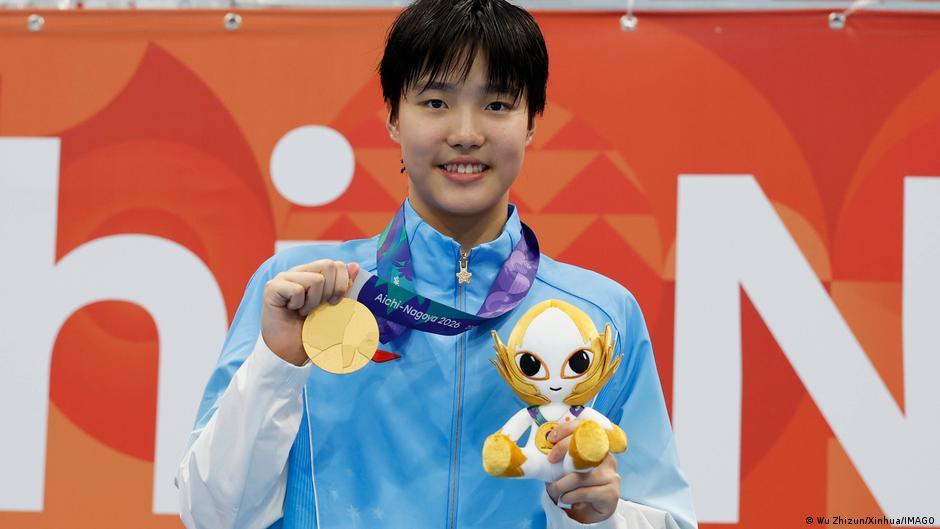
Chinese swimmer Yu Yiting achieved a new historic feat during the third Asian Games in Asia, where she broke the tournament record for the third time to crown herself as the winner of the 400-meter individual mixed event, adding it to her previous gold medals in swimming and butterfly.
These achievements consist of three gold medals, while she had won a bronze medal at last year's World Swimming Championships, placing her among the best young talents globally despite her age not exceeding 13 years.
Yu Yiting stated that she did not feel entirely comfortable during the final race, considering the challenge to be very great, while German commentator Loni Beck indicated that this early success may raise concerns about the sustainability of her career under media and environmental pressures.
Beck explained that young talents need early psychological and physical support from a young age to ensure their continuity, noting that sports should be enjoyable and no athlete should be deprived of success based solely on their actual competence.
She continued by saying that many athletes show their peak performance at a young age, but this does not mean their career will continue at the same pace, considering that establishing educational and psychological support structures is crucial for sports that allow competition without reaching 18 years old.
She also pointed out that athletic success will not last forever and that sports centers must help young athletes plan for their future after their careers end, especially since some sports show higher rates of body image disorders among youth.
Beck also mentioned that there are clear differences between the sports community and the general public regarding the mental and physical health of young athletes who may suffer from nutritional or emotional problems despite having fewer symptoms of depression.
In conclusion, she affirmed that every athlete has a different growth pattern and should not be deprived of early competition if they prove their competence, while emphasizing the importance of thinking about life after sports because the sports field is not final.
Analysis & context
Analysis & Context
From an analytical perspective, it is observed that swimming is one of the sports where peaks are reached at a young age compared to others, with names such as Japanese swimmer Kiyoko Iwasaki and Japanese artist Yumiki Kojima emerging who achieved great feats at fifteen years old. However, reaching this level requires extraordinary sacrifice and dignity involving intensive training that starts very early, as clarified by Loni Beck, who trained eight times a week since the age of fourteen.
In the broader context, international rules in the World Swimming Federation indicate that the minimum age for international competitions is 14 years, with exceptions for faster champions like Yu Yiting, while there are historical and modern examples of young champions in football, cricket, and gymnastics. Nevertheless, experts warn of clear disparities between the general athlete community and elite youth athletes regarding body image disorders, depression, and anxiety.
Loni Beck confirms that sports psychology must start at a very young age, just like physiotherapy, to ensure that sports are enjoyable and healthy, with the necessity of setting alternative life plans for athletes before they reach the stage of declining high performance. She also clarified that Rosemary Percell, who participated in an International Olympic Committee review, noted that some sports suffer from high rates of eating disorders while having lower rates of depression compared to the general public.
In the end, experts see that the approach of sports bodies stating "your competence makes you big enough" is correct if accompanied by appropriate support, but young athletes must be helped to find a life path outside the stadium or pool because sports are not the end of life and cannot be relied upon as a permanent goal.