Sourced fact
The News
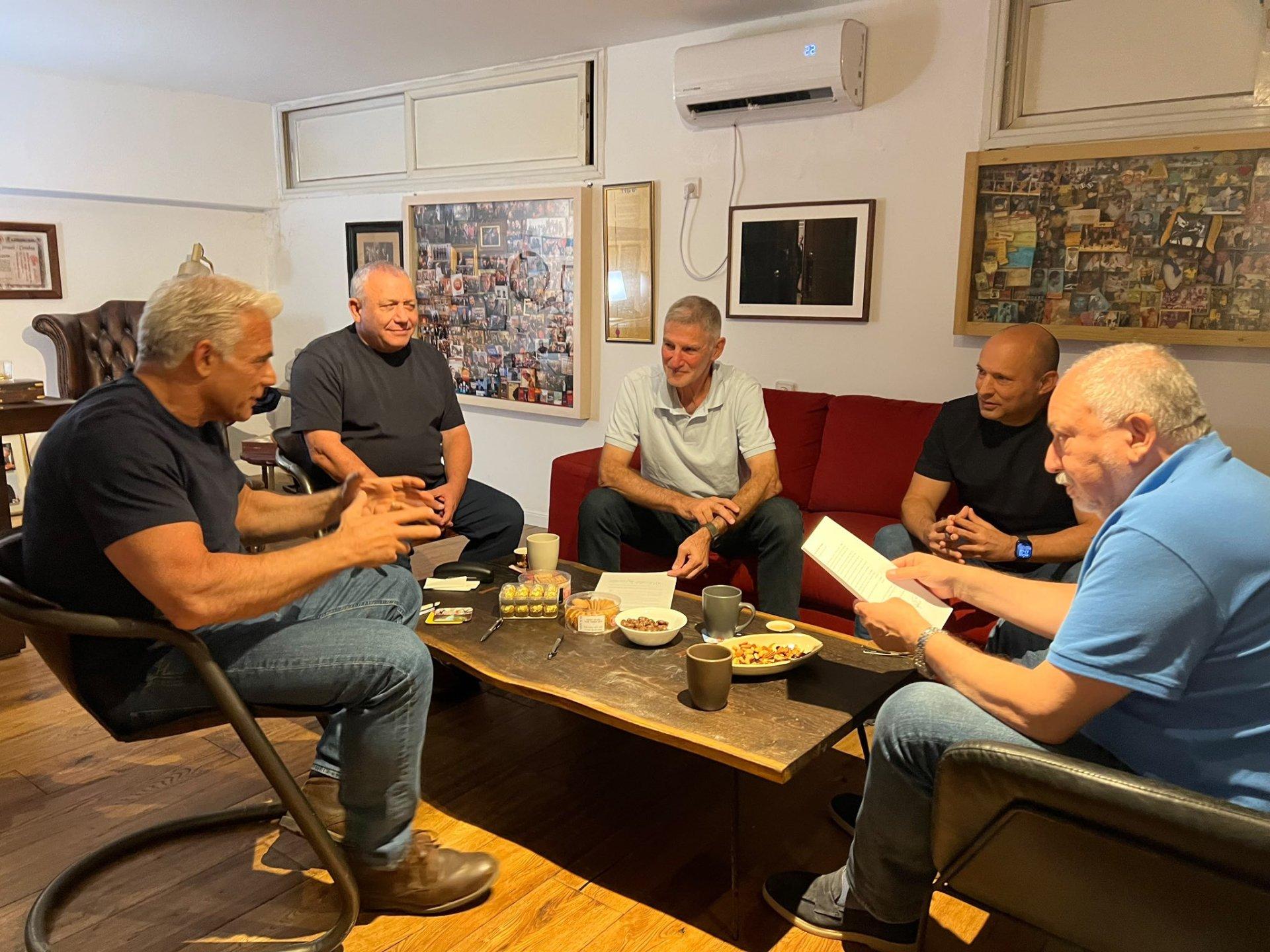
Israeli Prime Minister Benjamin Netanyahu strongly criticized leaders of opposition parties who have begun coordinating their efforts to form an alternative government ahead of the Knesset elections scheduled for October 27, according to Israeli Channel 12. This escalation followed a meeting on Saturday at the home of "Yesh Atid" leader Yair Lapid in Tel Aviv, where five political leaders gathered to discuss a joint strategy.
In his initial response to this agreement, Netanyahu claimed that "Yesh Atid" leader Gadi Einat is seeking to form a government including parties such as "Yesh Atid," "Benet 2026," "Israel Beiteinu," and Arab parties. On the X platform, Netanyahu shared an AI-edited image of the meeting, adding leaders from the "United Arab List" (Mansour Abbas) and "Hadash Ta'al" (Ahmad Tibi), asserting that the strong "Likud" party is the only path to stop these movements.
The opposition gathering includes leaders from parties such as "Yesh Atid," "Benet 2026," "Israel Beiteinu," "Yesh Atid," and Democrats. Lapid published a group photo of the delegation along with a detailed document outlining the principles of coordination. The document commits each party leader to working within their seat to boost voter turnout, attract support from different segments of society, ensure a majority, and form a new government.
The document also establishes three joint working groups within 48 hours: the first to increase voter turnout and protect election integrity; the second to draft principles for the new government, including an official investigative committee for the October 7, 2023 attacks and drafting a new constitution; and the third to coordinate media activity and combat misinformation. Naftali Bennett, leader of "Benet 2026," expressed optimism about his ability to win 63 seats and work together to reform Israel.
Analysis & context
Analysis & Context
From an analytical perspective, this meeting marks a turning point in the Israeli political landscape, where the opposition shifts from fragmentation to clear strategic unity aimed at toppling the current government. The group's focus on forming specific working committees within a short timeframe indicates their serious intent to implement a comprehensive plan including constitutional reform and investigation into the October 7 events.
In the broader context, Netanyahu's strong stance toward the opposition reflects his continued political strategy of marginalizing political rivals and creating an impression of national unity around his government. Additionally, adding names of Arab party leaders to the edited image may be an attempt to undermine the alliance's credibility or portray it as a threat to Israeli national security.
Forming an alternative unity government instead of the current one is a sensitive matter in Israel given ongoing internal and external tensions. Announcing the intent to create an official investigative committee for the October 7 attacks represents a major political move that could fundamentally change the dynamics of relations between the government and opposition.
Finally, the emphasis on increasing voter turnout and protecting democratic process integrity shows that the opposition prioritizes institutional stability despite sharp political disagreements. These steps reflect an attempt to overcome current crises and build a new political future in Israel.