Sourced fact
The News
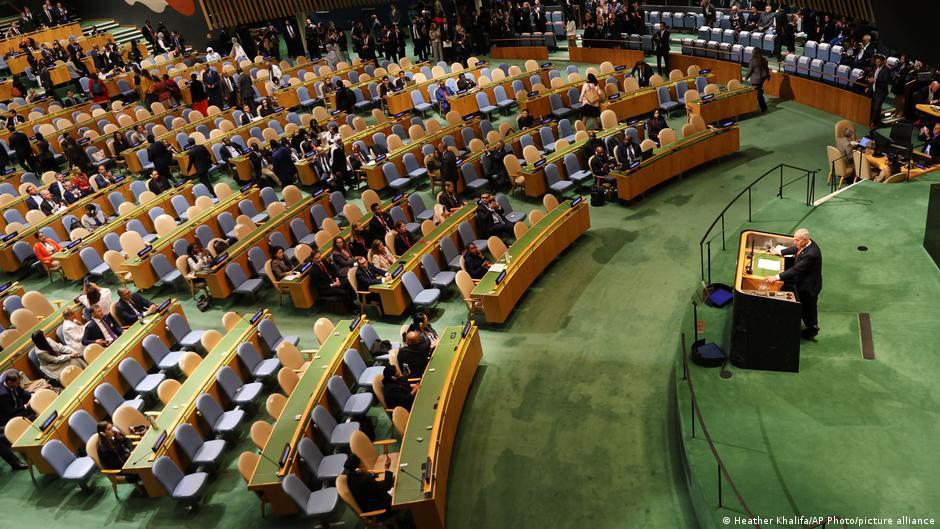
At the conclusion of the General Debate at the 81st session of the United Nations General Assembly, German Foreign Minister Johannes Wadepohl met with his Russian counterpart, Sergey Lavrov, on the sidelines of the sessions to hold highly tense talks. These talks, which were the first since Russia's invasion of Ukraine in 2022, reflect the deep division between the two countries regarding the future of the war in Ukraine.
Wadepohl stated that the meeting was intensive but achieved little progress due to fundamental disagreements between the two sides. He noted that he offered Moscow a reduction in tension, particularly in Ukraine, but received no clear response from the Russian side. The German minister also emphasized that Germany will not accept any incidents such as the attempted drone attack on Leipzig airport, which Berlin has blamed on Moscow.
On his part, Lavrov described the meeting as unnecessary and stated that he heard nothing different from Berlin's public position on the conflict. The Russian diplomat pointed out that Germany could contact him directly to read his statement instead of holding official meetings that add no new value to the file.
In his address to the General Assembly, Wadepohl warned of the risks posed by artificial intelligence and called for urgent global regulation of this technology, which could threaten the infrastructure of societies. He also stressed that Russia's war in Ukraine targets the lives of millions of innocent civilians and threatens European security and the international system based on the UN Charter.
He also called on all member states to persuade Russia to return to the negotiating table rather than building a future on the corpses of civilians in cities and villages. Germany reaffirmed its status as Ukraine's biggest supporter, defending it against Russian aggression, which is consistently condemned by the vast majority in the General Assembly.
In another context, the foreign ministries of India and Saudi Arabia called for de-escalation of tensions in the Middle East and restoring freedom of navigation in the Strait of Hormuz and the Red Sea. Meanwhile, Chinese Vice President Han Zheng criticized unilateral military actions and called on major powers to adhere to international rules.
Analysis & context
Analysis & Context
From an analytical perspective, this tense meeting reflects the continued diplomatic stalemate between Berlin and Moscow since 2022, where bilateral relations have turned into a state of continuous confrontation despite attempts to return to dialogue through marginal channels. Lavrov's rejection of the meeting and his urgent statements indicate that Russia views such encounters as mere media theater that does not change the reality of the war or Russia's position on the ground.
In a broader context, Wadepohl's statements on artificial intelligence come as part of an escalating global debate about the need for international regulatory frameworks to prevent a digital arms race and ensure these technologies are not used to threaten global security. This warning highlights Western countries' concerns about the dominance of certain technologies that could fundamentally alter geopolitical balances of power.
Furthermore, calls issued by foreign ministers of countries such as India and Saudi Arabia regarding the escalation of conflicts in the Middle East and maritime chokepoints reflect an international desire to ease regional tensions that affect global food and energy security. These efforts come at a time when the region is witnessing major geopolitical shifts requiring a delicate balance between national interests and adherence to international law.
Finally, Germany's continued support for Ukraine and its affirmation of rejection of any new escalation highlights the role of the European Union as a key diplomatic force calling for conflict resolution through negotiations rather than violence. This position aligns with international values promoted by the United Nations and aims to protect civilians and prevent the recurrence of modern war tragedies.