Sourced fact
The News
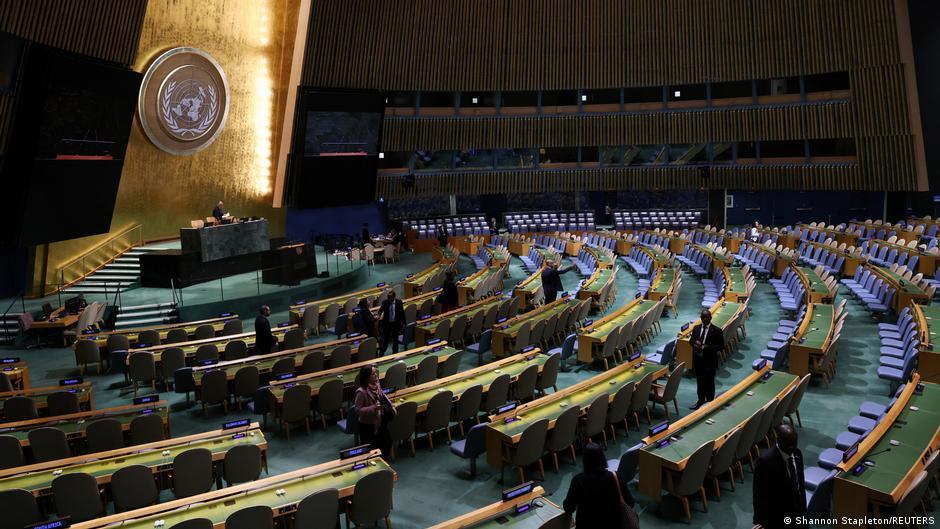
Several world leaders are absent from the 81st session of the United Nations General Assembly, which is being held in New York. They have been replaced by other officials or video messages for reasons ranging from domestic affairs to health and international politics.
The absence of German Chancellor Friedrich Merz is surprising, despite his desire to appear strongly on the international stage. He holds office amidst a domestic political crisis following his loss in parliamentary elections in three German states last September. He will be represented by German Foreign Minister Johann Wadephul, who will speak from the Green Podium on his behalf.
Italian Prime Minister Giorgia Meloni was also absent due to the need to handle domestic issues after the NATO summit, while South African President Cyril Ramaphosa was absent for health reasons; doctors advised him to rest, and he was replaced by Foreign Minister Ronald Lamola.
In Egypt, President Abdel Fattah al-Sisi is absent from New York without an official reason given by his office. This marks his first absence since returning to personal meetings after the pandemic, with Prime Minister Mostafa Madbouli taking his place. Nigerian President Bola Tinubu is absent because he is on vacation, having spent time in the United Kingdom and then France; his Vice President, Kashim Shettima, will represent his country.
The absence of Chinese President Xi Jinping has attracted significant international attention, despite his presence in the United States for an official visit to Washington. It is likely that bilateral relations with Trump are a priority rather than participation in the traditional multi-lateral forum at the UN. Russian President Vladimir Putin is also absent by presidential order without mentioning a reason; Foreign Minister Sergey Lavrov will address the Assembly on his behalf.
Palestinian President Mahmoud Abbas will be absent for the first time since 2017 after the U.S. embassy once again refused to issue him a diplomatic visa, despite the United States being legally committed to facilitating access to the UN headquarters. He will address the Assembly via video message, as he did last year.
Analysis & context
Analysis & Context
From an analytical perspective, the absence of leaders such as Merz and Modi reflects escalating domestic political priorities or shifts in the diplomatic representation strategies of major powers. In Germany's case, internal political pressures and local elections have led the Chancellor to focus on managing crises domestically rather than engaging in direct international appearances.
In a broader context, Xi Jinping's direct visit to Washington indicates a shift in the priorities of bilateral relations between great powers, with China preferring to focus on direct confrontation with the United States on trade and security issues rather than participating in traditional multi-lateral forums.
Additionally, the refusal of President Mahmoud Abbas's visa highlights ongoing diplomatic tensions between Washington and Jerusalem, forcing the Palestinian leadership to resort to digital messages to maintain their symbolic presence at the UN without leaving Palestinian territory.