Sourced fact
The News
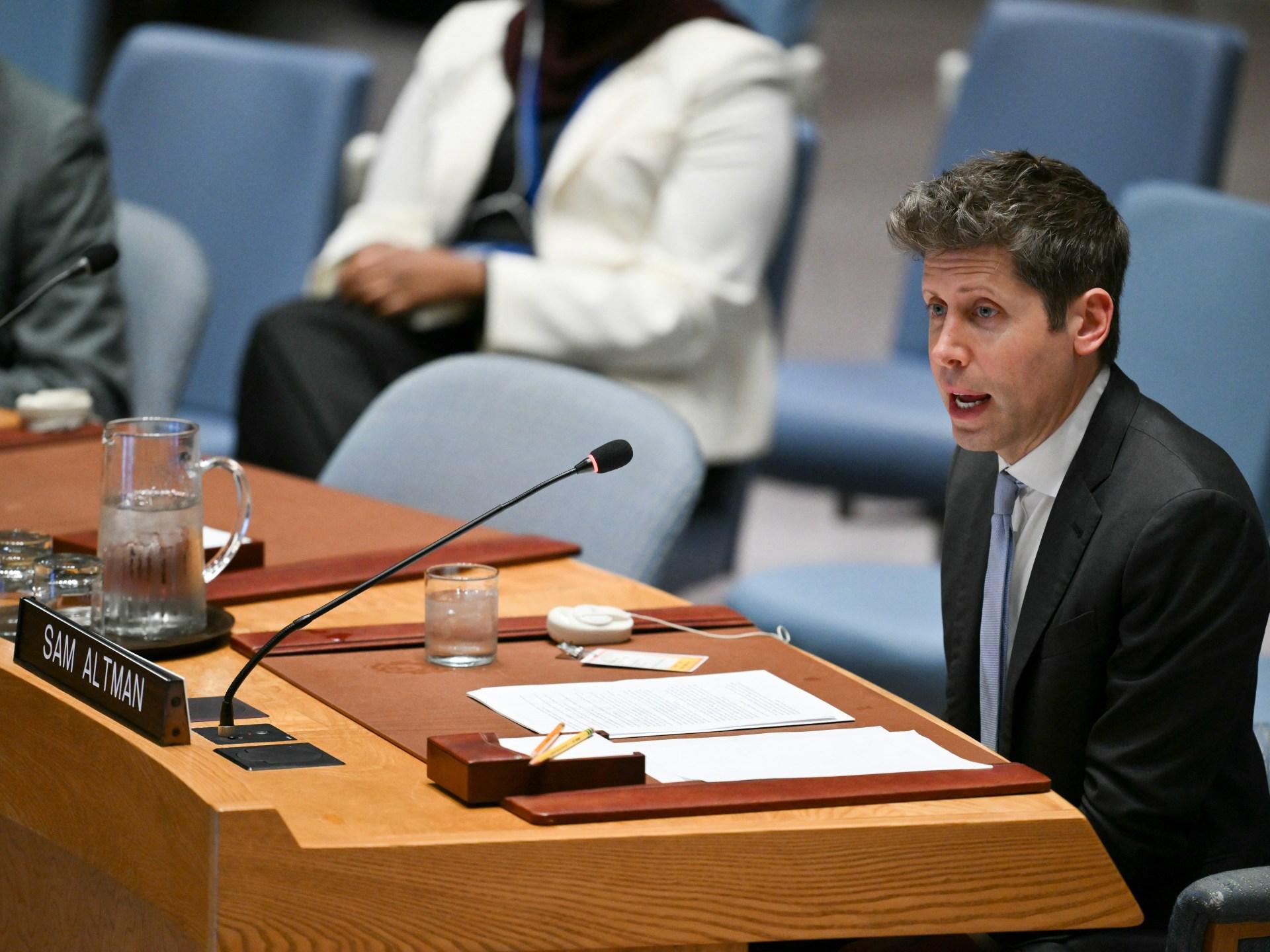
Leaders of major AI companies warned at the United Nations that the absence of global oversight on this technology could expose humanity to a grave danger, urging the Security Council to take immediate action. Dario Amodei, CEO of Anthropic, stated that poor management of artificial intelligence could make it a threat to all of humanity, while Sam Altman from OpenAI confirmed that the world might lose control over the future of this technology.
In a meeting held in New York in conjunction with the UN General Assembly and invited by France, Altman and Amodei called on world leaders to take steps to ensure AI democracy and not leave its decisions solely in the hands of laboratories in San Francisco. Altman pointed out that these decisions must be shaped through democratic processes and governed by governments accountable to their peoples, emphasizing the necessity of responsible governments participating in shaping the technology's future.
Nevertheless, the United States, led by President Donald Trump, showed hesitation in imposing new restrictions on the industry, where the administration's representative at the meeting rejected any international efforts to impose centralized control and global governance of AI. In contrast, it is expected that Chinese President Xi Jinping will discuss AI regulation during his visit to Washington this week amidst a fierce technological race that limits the likelihood of any single country imposing new restrictions on its efforts.
French and British representatives in the Council participated in expressing the companies' concerns, affirming the international community's need for a common framework to regulate the technology. Clement Delang, CEO of Hugging Face, stated that his company relies on Chinese models to defend itself against attacks from unregulated AI models. Delang noted they were attacked by AI but simultaneously used it to defend themselves, benefiting from fewer restrictions on Chinese tools compared to American ones.
UN Secretary-General António Guterres emphasized that the future of artificial intelligence cannot be determined by a few countries or left to the whim of some billionaires, calling for international cooperation despite the focus of major players on growth opportunities. Additionally, Jose Bengio, Canadian AI expert, stated that the risks are real and imminent, and the Council faces an uncontrollable threat that no single country can contain alone and does not respect the borders defended by nations.
Analysis & context
Analysis & Context
From an analytical perspective, this meeting represents a significant turning point in international discourse on artificial intelligence, where the focus shifts from mere commercial development to national security considerations and human existence. Although major countries are currently hesitant to impose strict restrictions for fear of hindering their technological progress, concerns about "artificial general intelligence" that could surpass human capabilities are beginning to rise among experts and decision-makers.
In a broader context, the United Nations was not unfamiliar with this issue; in 2024, the General Assembly adopted its first resolution on artificial intelligence calling for the protection of personal data and human rights. The organization has also recently established independent scientific committees and global dialogue sessions to assess risks and set governance standards, reflecting an international desire to prevent a digital arms race that could lead to uncalculated catastrophic outcomes.
It is also noted that the nature of the threats addressed by experts transcends national borders, as no single country can contain the risk of self-developing AI alone. This reality drives the necessity for international cooperation despite the ongoing geopolitical competition between major powers, making any global consensus difficult to achieve but essential to ensure a safe future for humanity in the era of rapid digital transformation.