Sourced fact
The News
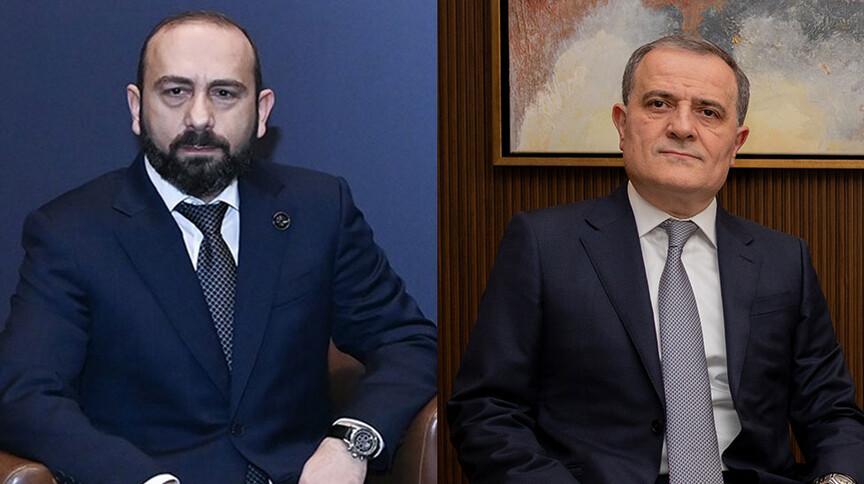
Azerbaijan's Foreign Minister Jeyhun Bayramov met with Armenia's Foreign Minister Aram Mirzoyan on the sidelines of the 81st session of the United Nations General Assembly held in New York. During their meeting, both ministers emphasized the importance of achieving sustainable peace between the two countries and reviewed the progress made since the Washington Summit held in August 2025, which concluded with the signing of a joint statement and a preliminary peace agreement.
According to a statement issued by the Azerbaijani Ministry of Foreign Affairs, both sides paid special attention to removing obstacles to economic infrastructure and transport links connecting Azerbaijan and Armenia. They described commercial interactions and cross-border crossings between the two countries as practical examples of the tangible benefits of peace, underscoring the necessity of continuing direct dialogue between them.
The ministers also exchanged views on the possibility of strengthening a positive agenda across various multilateral platforms, agreeing to continue their direct dialogue. Following the conclusion of the talks, Armenia's Ministry of Foreign Affairs issued a statement fully matching the content of the Azerbaijani statement, reflecting a consensus between the two sides regarding next steps.
Analysis & context
Analysis & Context
From an analytical perspective, this meeting represents a concrete practical step toward implementing the spirit of the preliminary peace agreement signed in Washington a year ago. Focusing on infrastructure and transport is not merely diplomatic rhetoric; it signals a shift from political discourse to genuine development projects aimed at more seamlessly linking the Azerbaijani and Armenian economies.
In the broader context, these talks come within the framework of intensive international efforts to ease long-standing tensions in the Caucasus region. The success of both parties in reviewing progress since the American summit indicates positive momentum that could open doors for further regional cooperation and reduce the likelihood of old conflicts resurfacing, which have plagued both peoples for years.
The preliminary peace agreement signed in August 2025 marks a historic turning point, bringing an end to decades of military and political tension. The continued direct dialogue between the two foreign ministers confirms both countries' desire to build a future based on mutual trust and joint action, rather than relying solely on international mediation for every small step.
Finally, launching joint infrastructure projects could completely reshape the regional economic map, as the geographical area between Azerbaijan and Armenia could become a new hub for trade and investment in the Middle East and Central Asia.