Sourced fact
The News
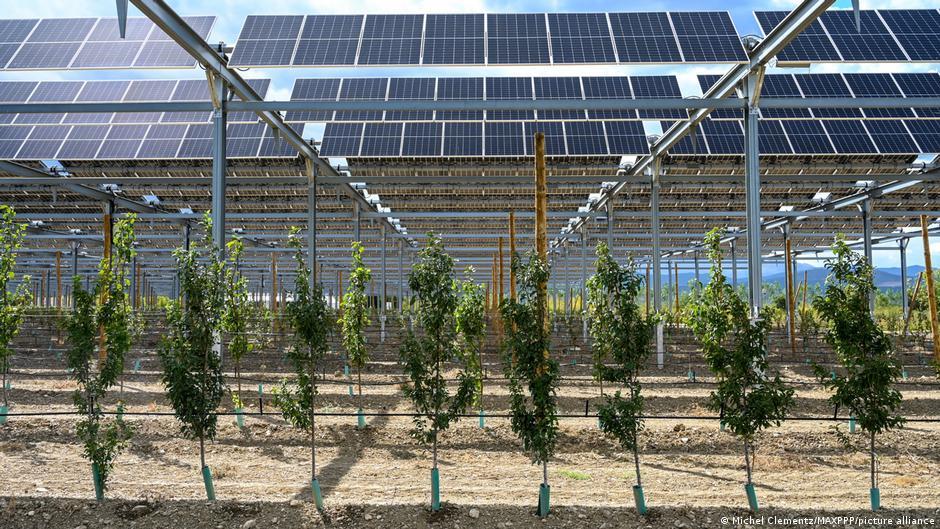
Traditional solar farms are typically silent except for the hum of inverters, but about 10% of solar farms in the United States now host a new sound: the barking of sheep. This is due to the adoption of a strategy called "agrivoltaics." This strategy involves allowing livestock or crops to grow alongside renewable energy infrastructure, where the panels provide shade for animals and protect crops from weather elements.
Carl Bernatchez, Professor of Plant Biology at the University of Illinois, explained that having plants under solar panels helps cool the ground surface, increasing electricity generation efficiency compared to asphalt or concrete. He also noted that the shade provided by the panels maintains soil moisture and creates cooler conditions that boost crop yields, while the panels themselves benefit from lower temperatures to increase energy generation per watt of sunlight.
This field is in its early stages globally, with current projects representing only about 18.4 gigawatts out of total global solar capacity as of mid-2025. However, applying this technology to a small percentage of agricultural land in Europe could be enough to surpass the 2030 solar energy targets. The idea of combining agriculture and solar power dates back to 1981 when German scientists published an article about potatoes grown under collectors, but the first experimental project did not begin until Japan in 2004.
These projects take three main forms: horizontal, vertical, and integrated over greenhouses. Crops that tolerate shade, such as grapes, tomatoes, and strawberries, are preferred, along with sheep, which have proven effective at managing farms without damaging equipment. Sheep manure also contributes to soil fertilization and reduces the need for herbicides, making it an economically attractive option for sheep farmers who shift from paying land rent to receiving payments for grazing their animals under the panels.
Austin Kinzer, an agrivoltaics expert, said this model represents a radical transformation in the economics of the sheep industry, which has struggled since World War II. It allows farmers an alternative income source that protects them from extreme weather fluctuations. This technology is considered a unique solution that combines adapting to climate change and mitigating its effects by reducing emissions and improving energy efficiency simultaneously.
However, adopting this technology faces challenges, particularly in humid regions such as the Midwest United States, where panel shade reduced corn and soybean yields, while it succeeded in dry areas like the American West. Farmers also face additional costs for raising panels and changing equipment, plus the difficulty of finding nearby successful models to emulate due to the scarcity of existing projects.
Experts hope that agrivoltaics will help bridge the cultural gap between farmers and energy companies wishing to convert agricultural land into power plants only. Opinion polls indicate that over 80% of Americans would support solar energy projects if they allowed for simultaneous food and energy production, making it a middle ground that resolves tensions between maintaining agriculture and generating electricity.
Analysis & context
Analysis & Context
From an analytical perspective, agrivoltaics represents a rare intersection between climate change adaptation and mitigation, offering a dual solution that combines clean energy production with protecting crops from heat stress. Research published in the journal "National Science" indicates that climate change will make regions drier, expanding the areas where this technology can compensate for crop losses and increase overall profitability.
In the broader context, the history of integrating solar panels with agriculture dates back to 1981 when German scientists published an article about growing potatoes under solar collectors, but the first experimental projects did not begin until Japan in 2004 due to land scarcity there. Despite environmental and economic benefits, the technology faces challenges related to additional equipment costs and changes in farming practices, plus its unsuitability for all geographic regions, as different experiments have shown between the humid American West and Midwest.
There is also cultural tension between farmers who want to continue farming and energy companies that want to produce electricity; some view converting agricultural land into solar panels as turning farmers into energy producers only. Agrivoltaics helps bridge this gap by allowing continued farming while producing electricity from the same land, increasing community acceptance of solar development by an additional 10% compared to general solar energy development.