Sourced fact
The News
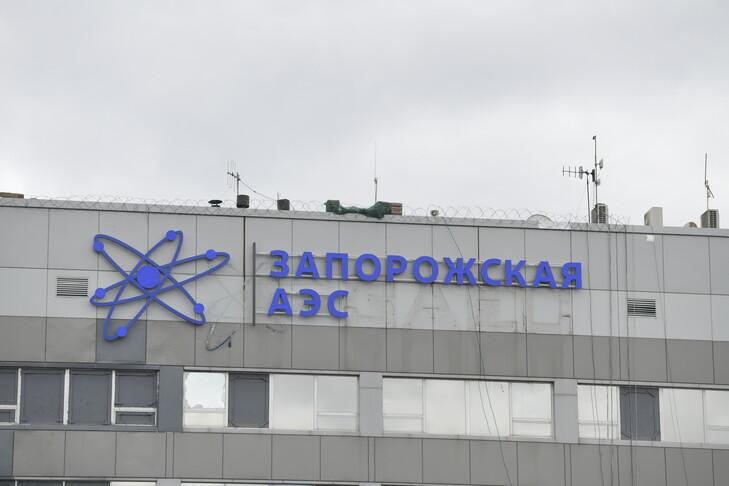
The Russian Ministry of Foreign Affairs announced today that its Minister, Sergey Lavrov, held important talks with the Director of the International Atomic Energy Agency (IAEA), Rafael Grossi, in New York on the sidelines of the United Nations General Assembly. The two sides discussed the current situation at the Zaporizhzhia Nuclear Power Plant and the Iranian nuclear program, with the dialogue focusing primarily on what Moscow described as "ongoing attacks and provocation" launched by Ukraine against the plant and the neighboring city of Enerhodar.
The agenda also included discussions on the future of the Iranian nuclear program following a series of strikes carried out by Israel and the United States on Iranian nuclear facilities under IAEA protection. In another context, Lavrov met with UAE Deputy Prime Minister and Foreign Minister Abdullah bin Zayed Al Nahyan to exchange views on regional and international issues, with particular emphasis on the situation in the Gulf region and Palestinian territories.
Additionally, Lavrov held bilateral meetings with Jordanian Foreign Minister Ayman Safadi to discuss bilateral relations and the outcomes of the recent Russian-Jordanian government committee, as well as rapid developments in the Middle East, including rising tensions between Palestinians and Israelis. He also met Serbian President Aleksandar Vucic to discuss bilateral cooperation and the political situation in Serbia and the Balkans, focusing on resolving Kosovo based on UN Security Council Resolution 1244.
Analysis & context
Analysis & Context
From an analytical perspective, this meeting between Lavrov and Grossi represents a Russian attempt to unify international nuclear deals amidst increasing Western pressure, especially with ongoing attacks on critical infrastructure in Ukraine. The focus on Iran appears to be a direct response to the geopolitical changes triggered by recent strikes on Iranian nuclear centers, placing the IAEA in a sensitive position amid escalating tensions.
In the broader context, this round of multilateral meetings reflects a Russian strategy aimed at maintaining open lines of communication with Arab, African, and European countries to safeguard its interests amidst a gradual breakdown of international consensus on Middle East issues. Emphasizing issues such as Kosovo and the Gulf also signals Moscow's desire to remain an active and significant party in shaping political solutions to complex regional crises.
The diversity of Lavrov's partners this week at the UN General Assembly, ranging from the United States and UAE to African nations like Senegal and Brazil, shows that Russia is striving to expand its international support base and reduce the diplomatic isolation it faces. Furthermore, discussions on the situation in Lebanon and working within UN platforms underscore the importance of Russia's role as a potential mediator in resolving multi-dimensional conflicts facing the Arab region and the world.