Sourced fact
The News
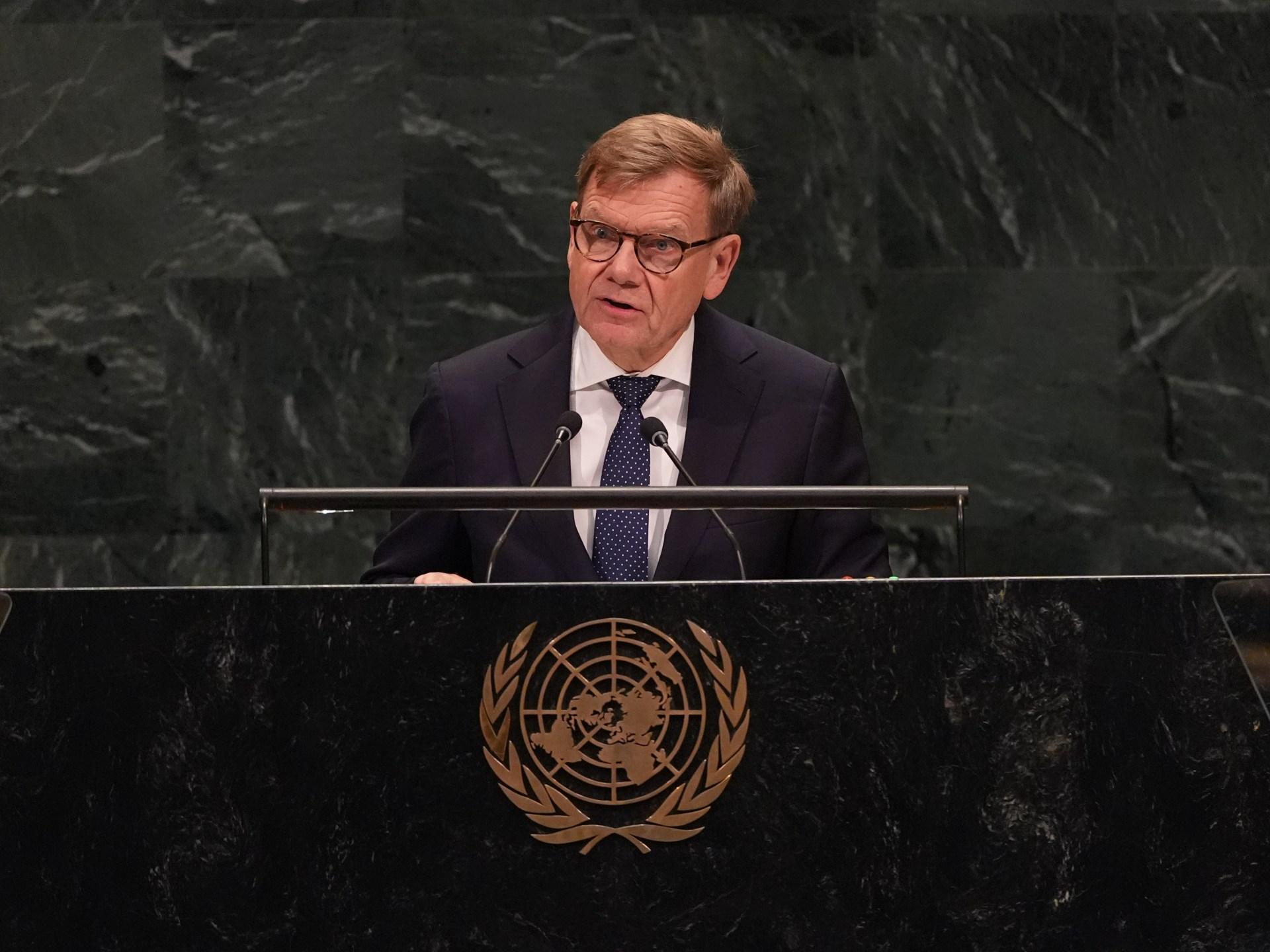
German Foreign Minister Johannes Hadwiger called on Russia to abandon its dangerous escalation path with it, Europe, and NATO during his meeting with Russian counterpart Sergey Lavrov in New York, according to Al Jazeera. This round of talks marks the first since Russia's invasion of Ukraine in 2022, which Germany requested before Lavrov's address to the UN General Assembly on Saturday.
During his speech at the General Assembly, Lavrov stated that Germany is not only Kyiv's main patron but also seeks to be a leading military power in Europe, prompting questions about whether Berlin realizes the consequences or has learned lessons from World War II. He added that diplomatic relations between Berlin and Moscow have been frozen since the invasion and deteriorated further after a drone incident near Leipzig Airport, which Germany blamed Russia for while Moscow denied involvement.
In a subsequent press conference, Lavrov clarified that he learned nothing new from the German side during the talks, noting that what Foreign Minister Hadwiger said was already available in official German statements, adding that one could have contacted him to read his statement instead of holding a meeting. The two ministers discussed bilateral relations and the war in Ukraine, according to diplomatic sources from both sides.
Hadwiger urged Lavrov to do everything possible to reach an agreement on grain exports via the Black Sea, while Lavrov confirmed that Russia is conducting talks with India, Egypt, and Turkey to ensure safe navigation in the area. The Russian official also emphasized the necessity of discussing Ukrainians separately and in a manner of demands rather than requests, leading him to blame Kyiv for attacks on ships.
At the conclusion of the meeting, Hadwiger informed his European allies of the meeting's content via a message seen by Reuters, reiterating his stance on the Russian war and calling for an immediate and comprehensive ceasefire focused on grain exports and energy infrastructure.
Analysis & context
Analysis & Context
From an analytical perspective, this meeting represents a bold diplomatic attempt to restore direct communication channels between Berlin and Moscow at a time when military and political tensions are escalating significantly. Although Lavrov indicated that the talks yielded no new information, the nature of Germany's request and its focus on the grain file suggest a European desire to keep the humanitarian and economic file open as a potential compromise.
In the broader context, the issue of exporting grain via the Black Sea remains a major international concern due to its impact on global food security and agricultural crop prices. Several countries, including India, Egypt, and Turkey, are currently engaged in separate negotiations to ensure safe navigation in this maritime area, reflecting the geopolitical complexity surrounding the conflict.
Furthermore, Lavrov's statements regarding Germany's role as a leading military power have sparked significant discontent in Europe and underscore the deep divisions that have emerged between European states and Russia since the war began. The German position, which combines calls to stop escalation with pressure for a ceasefire, appears to reflect a balanced strategy aimed at protecting its interests without abandoning its supportive stance toward Ukraine.