Sourced fact
The News
Russian Foreign Minister Sergey Lavrov met with senior officials from various countries and international organizations on the sidelines of the 48th session of the United Nations General Assembly in New York, according to official announcements released by the Russian Ministry of Foreign Affairs. The meetings held last Thursday included a session with his Iranian counterpart Abbas Aragchi, the Director of the Office of UN Secretary-General António Guterres, as well as meetings with the foreign ministers of Kazakhstan and India.
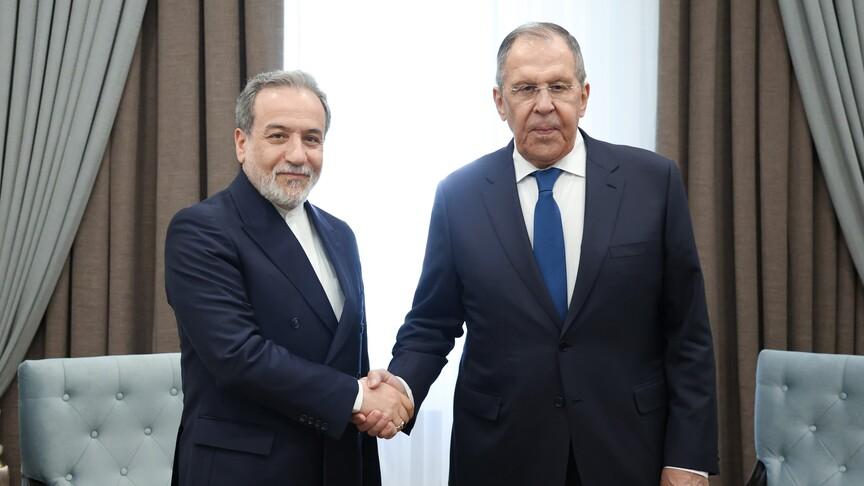
In a bilateral dialogue with Iranian Foreign Minister Abbas Aragchi, both parties focused on critical developments in the international region, specifically highlighting the evolving situation surrounding Iran. The Russian Ministry of Foreign Affairs confirmed that both sides agreed unanimously that there is no alternative to a diplomatic solution for the crisis sparked by illegal actions taken by the United States and Israel on February 28. The ministers also discussed the upcoming schedule of meetings between Russia and Iran at various levels, based on agreements signed during the meeting of the two heads of state in Bishkek, the capital of Kyrgyzstan, on September 1.
In a separate meeting with UN Secretary-General António Guterres, whose term ends at the end of this year, Lavrov discussed issues related to the international organization's activities and the results of his leadership period. Lavrov emphasized the need for carefully considered reforms of the United Nations to adapt it to the reality of a multipolar world system, calling for an expansion of the representation of global majority peoples within the Secretariat to ensure that staff perform with complete impartiality. He also affirmed that undermining the governmental character of the organization or violating the specific division of responsibilities among its main bodies is unacceptable.
Lavrov also participated in discussions with Kazakh Foreign Minister Mukhtar Tuleberdi, where they discussed areas of deep bilateral cooperation and comprehensive strategic partnership between the two countries. During these meetings, Lavrov expressed his sympathy for the victims of an incident that occurred on Thursday in the Caspian Sea during a combat training mission that resulted in the death of 14 people. In his meeting with Indian Foreign Minister Subrahmanyam Jaishankar, the focus was on strengthening the Russian-Indian strategic partnership and close coordination within the United Nations, G20, and BRICS.
Analysis & context
Analysis & Context
From an analytical perspective, this intensive diplomatic round by the Russian Foreign Minister in New York underscores the importance of maintaining open lines of communication with regional and international partners amidst rising tensions. The focus on diplomatic solutions to the Iranian crisis reflects Moscow's continued rejection of any military escalation or unilateral sanctions, particularly those imposed by the United States and Israel, highlighting Russia's role as a potential mediator or active player in regional stability.
In a broader context, discussions about reforming the United Nations and adapting it to a multipolar system reflect both internal and external pressures on the international organization to renew its legitimacy and representation. Especially with the current Secretary-General's term ending soon, these proposals indicate an urgent need to restructure international institutions to be more responsive to the geopolitical transformations that have characterized the world over the past decade.
Furthermore, strengthening strategic partnerships with countries like India and Kazakhstan demonstrates a Russian strategy aimed at building multilateral alliances outside the traditional NATO or Western allies framework. This approach enhances Russia's ability to balance the influence of major Western powers, especially in light of US laws targeting countries purchasing Russian fuel that have raised concerns in New Delhi.
Finally, coordination on global issues such as the conflict in Ukraine and the situation in the Middle East highlights the importance of Russia's role as a great power seeking to preserve its national interests and protect its national security in a changing and complex international environment.