Sourced fact
The News
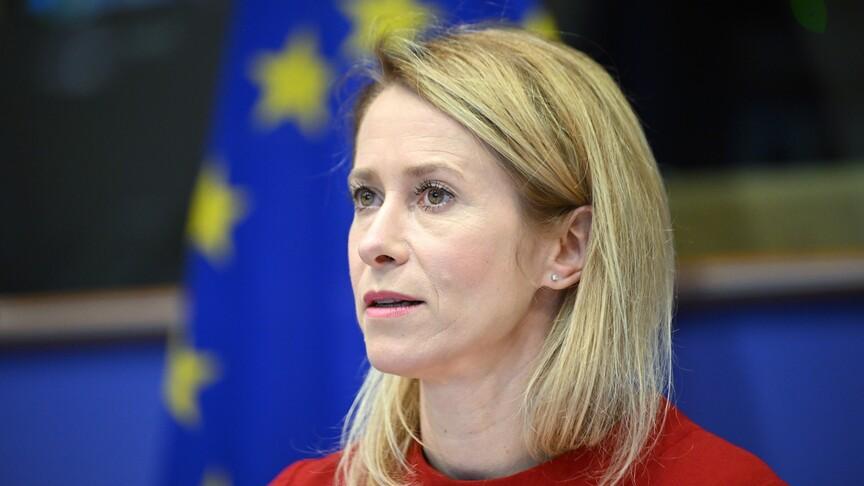
Kaja Kallas, Head of the European Union's Foreign Policy, warned on Thursday that the gap between international commitments to a two-state solution and the difficult reality on the ground in occupied Gaza and the West Bank is widening. Speaking at an Alliance for Two-State Implementation meeting in Geneva, Kallas confirmed that international support for establishing a Palestinian state alongside Israel remains strong, but developments on the ground are moving in a completely different direction from this aspiration.
Kallas stated that the aspirations of the global alliance and the New York Declaration have become "increasingly at odds with the difficult reality on the ground," noting that progress in Gaza remains "extremely limited" amidst continuing strikes and worsening humanitarian needs without achieving tangible improvement for the Palestinian situation. At the same time, she warned about the continuation of violence and settlement expansion in the West Bank, emphasizing that these two factors undermine the viability of any two-state solution.
Kallas called on countries to "bridge the gap between commitments and actions and reality on the ground," expressing her support for the reform measures adopted by the Palestinian Authority despite the "extremely dire" circumstances, while advocating for the continuation of these reforms. She also clarified that the European Union supports preparations for Palestinian legislative elections and is working to enhance stability and economic sustainability in the West Bank, as well as supporting early recovery efforts in Gaza.
Analysis & context
Analysis & Context
From an analytical perspective, Kallas's warnings reflect growing concern within European diplomacy regarding the declining prospects for a traditional political solution due to demographic and security changes on the ground. The continued settlement expansion in the West Bank poses an existential threat to the model of an independent Palestinian state, making any future negotiations face enormous geographical and political obstacles that were not present to the same extent previously.
In the broader context, Kallas's remarks signal a shift in European discourse from merely theoretical advocacy for a solution to explicit recognition of the "difficult reality," which may open the door to new policies focused on managing the status quo rather than pursuing long-term political goals in the short term. Additionally, the EU's support for legislative elections and economic recovery reflects a strategy aimed at building resilient Palestinian institutions capable of withstanding challenges even in the absence of an immediate political solution.
It is worth noting that the Geneva meeting of the Alliance for Two-State Implementation represents an important international platform to discuss these challenges, where representatives from member and non-member states gather to explore ways to implement the historic 2003 declaration calling for two states living side by side. The continuation of strikes in Gaza and critical humanitarian needs add another layer of complexity, making any comprehensive peace plan extremely difficult without first addressing the human and security crisis.