Sourced fact
The News
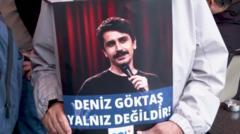
A court in Istanbul has sentenced the well-known comedian Deniz Goktash to 19 months in prison for insulting President Recep Tayyip Erdogan, but ordered his release due to time already served in custody. The court also imposed travel restrictions preventing him from leaving Turkey. Goktash, who denied the charges against him, now faces the possibility of the case being reconsidered by an appeals court.
Last July, Goktash was arrested at Istanbul Airport upon his return from vacation, where he was accused by prosecutors of describing Erdogan as a "shy dictator" in a speech. Despite Goktash's assertion that his description of Erdogan was not an insult but a political comment, the court upheld the charges against him. During the court session, Goktash did not lose his sense of humor, stating: "Three months of my life were taken, but I quit smoking, so I'll add three more months to my life."
Goktash expressed his happiness at being released and reuniting with his family, but also pointed out that there are thousands of other people in Turkish prisons for their political opinions. He mentioned that there are numerous journalists, human rights activists, and other political prisoners who are still detained. Goktash said: "I am very happy to be back with my family and friends, but there are many people who are still detained for their political opinions."
Goktash's ruling comes in the context of a wave of arrests in Turkey that NGOs say aim to suppress opposition. Although the Turkish government denies that these arrests have political motivations, many individuals, including elected Istanbul Mayor Ekrem Imamoglu, remain in custody.
Analysis & context
Analysis & Context
From an analytical perspective, the ruling by a Turkish court against comedian Deniz Goktash reflects the tension between freedom of expression and the constraints imposed by the Turkish government. This case highlights the challenges faced by activists and human rights defenders in Turkey.
In a broader context, Goktash's case is part of a wider wave of arrests in Turkey, where many journalists, political activists, students, and LGBTQ+ rights defenders face restrictions on their freedoms. These restrictions raise concerns about the independence of the judiciary and human rights in the country.
Politically, Turkey faces increasing international criticism for restricting freedom of expression and basic rights. This case underscores the need for protecting human rights and free speech in Turkey.