Sourced fact
The News
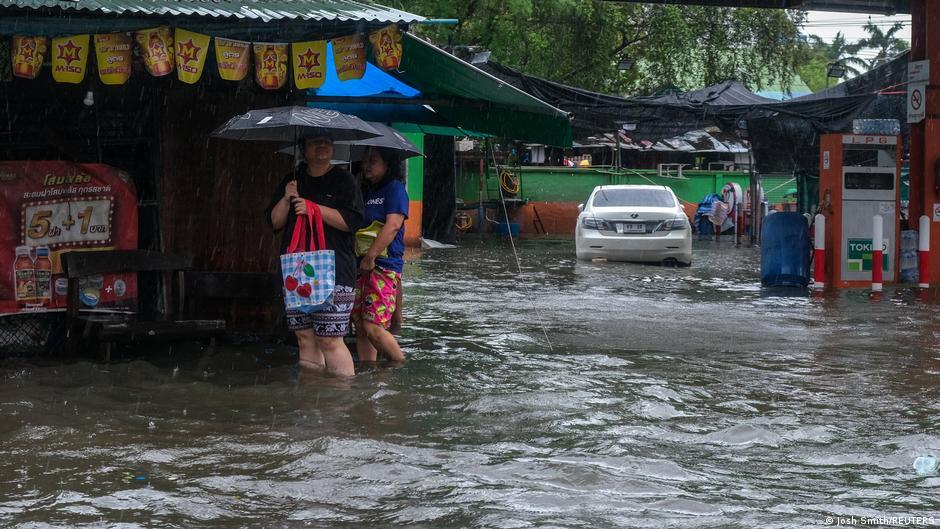
Bangkok authorities declared a comprehensive state of disaster on Saturday covering 50 districts in the Thai capital following heavy rains that caused devastating flooding over the past few days. Chatchai Sitthipong, Governor of Bangkok, clarified that the situation has begun to stabilize provided rainfall stops. The governor stated that approximately 300 millimeters of water had fallen since late Thursday afternoon, causing waterways to fill completely and making drainage difficult.
Sitthipong noted that the eastern parts of the city are most affected and advised residents, especially those living near canals, to move their belongings to higher ground due to all canals being full of water. He also urged patients relying on life-support medical devices to temporarily relocate to hospitals to ensure their safety amidst these difficult conditions.
Regarding humanitarian impacts, Thai authorities reported that over 84,000 people across 21 provinces nationwide have been affected by flooding as of Saturday, with a significant concentration in the central region. One local vendor noted that the current situation is worse than during the deadly floods of 2011, which claimed more than 500 lives and damaged millions of homes.
The Thai Meteorological Department stated that heavy rains will continue across most parts of the country until Sunday due to a strong low-pressure system controlling the central region and increasing monsoon conditions. Officials warned residents near canals to remain vigilant against ongoing flood risks, while authorities opened shelters to house evacuees who were forced to leave their homes.
Analysis & context
Analysis & Context
From an analytical perspective, the governor's statements indicate a rapid shift in disaster dynamics, moving from acute deterioration to a phase of relative stability. This reflects the efficiency of emergency efforts despite the continued threat from the strong low-pressure weather system. This development highlights the importance of monitoring waterway levels that act as the city's arteries; their fullness means the natural drainage cycle has stopped, increasing the risk of sudden collapse at any moment.
In a broader context, these floods bring back memories of the 2011 disaster, which resulted in over 500 deaths and the destruction of millions of homes, placing the current event within a somber historical perspective that reveals the recurrence of natural disasters in Thailand. Compared to the previous disaster, residents feel the current situation may be worse due to the speed of rainfall and the fact that canals are now full—a condition not present with the same capacity or efficiency in the distant past.
The Thai Meteorological Department is monitoring a low-pressure system dominating the central region and enhancing monsoon conditions, indicating that flooding is not merely an isolated event but part of a recurring climate pattern requiring continuous preparedness. The ongoing warnings to residents about moving belongings and staying in hospitals reflect the necessity of adapting to a new reality where areas near canals have become permanent hazard zones requiring proactive risk management.
Finally, the impact on over 84,000 people across 21 provinces highlights how the disaster extends beyond just the capital's scope, necessitating national coordination for crisis management and support for affected individuals in rural and remote areas that may be less equipped to face such severe environmental challenges.