Sourced fact
The News
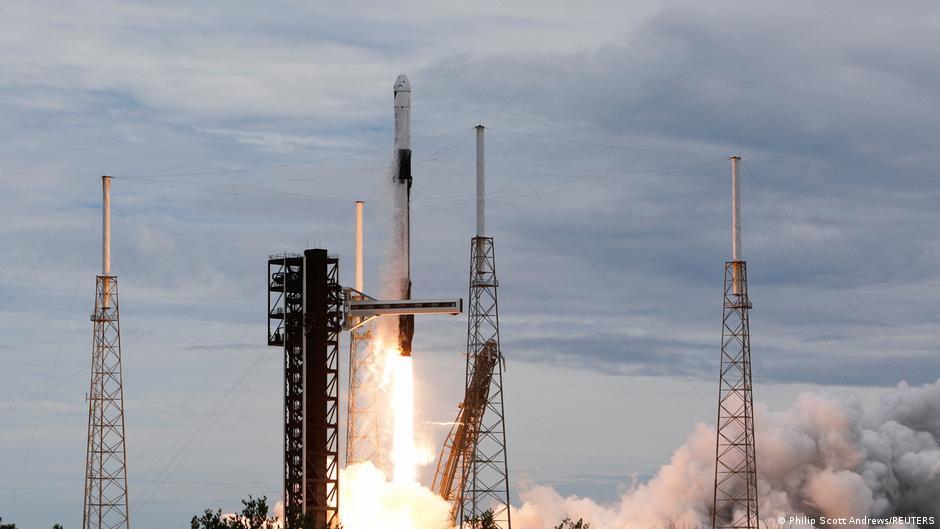
An American spacecraft completed a record-breaking journey to the International Space Station (ISS) on Thursday, with SpaceX's "Grace" capsule reaching the station just 7 hours and 55 minutes after launch. According to NASA officials, this journey is the fastest in the history of American missions to the ISS, with the spacecraft launching from Cape Canaveral in Florida at 11:10 AM local time (15:10 GMT).
NASA noted that the speed of the journey largely depends on the distance between the ISS and the spacecraft at launch. The station's position at the time of launch helped to accelerate the journey. In contrast, the previous journey from the United States took over 30 hours to reach the station.
The current mission transported four new astronauts to the station, including American Jessica Watkins, who became the first African American woman to lead a crew to space. The crew also includes Loei Dailleny, Josh Cassada from Canada, and Sergey Kud-Sverchkov from Russia. According to the plan, they will spend six months at the ISS before being replaced by the Crew-12 team, which is scheduled to return to Earth on Monday.
Despite political tensions arising from Russia's invasion of Ukraine in 2022, the United States and its other ISS partners continue to work with Russia on the space station. NASA has announced its commitment to operating the ISS until 2030.
Analysis & context
Analysis & Context
From an analytical perspective, the speed of the recent journey highlights significant advancements in spacecraft technology and improvements in space travel methods. SpaceX utilizes advanced technologies such as the reusability of spacecraft to reduce costs and increase efficiency.
In a broader context, the International Space Station faces challenges due to political tensions among participating nations. However, scientific and technological collaborations among nations in the field of space continue, reflecting the importance of these missions for scientific research and technological innovation.
It is worth noting that the ISS plays a pivotal role in space scientific and engineering research, offering a unique environment for long-term experiments and studies.