Sourced fact
The News
A massive mass grave has been announced in northern Sri Lanka containing the remains of 572 people, including children and infants, making it the largest of its kind discovered in the country to date. These remains were found by chance while workers were expanding a burial site floor in the Chamanai area of Jaffna district, where they discovered human remains piled on top of each other without clothing or any signs of normal burial practices.
It is believed that these victims are civilians who disappeared during the devastating 26-year civil war between 1983 and 2009, which ended with a victory for government forces over the Liberation Tigers of Tamil Eelam (LTTE). Previous reports indicated rumors about this grave prior to its official discovery, as a soldier on trial mentioned the murder of a girl and the looting of her family's bodies and graves in the same area.
A legal officer from Sri Lanka's Human Rights Commission stated that initial examinations suggest this site was not a natural burial ground and does not align with normal Hindu practices, raising strong suspicions of extrajudicial killings. The commission added in its previous report that there is a reasonable possibility the burial was illegal and followed execution-style procedures, while archaeologists confirmed that most remains were tightly stacked in shallow graves only two meters deep.
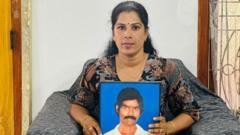
Victim families like Jiyaropi Jayapalan hope to find answers about the fate of their loved ones who have been missing for decades; her father was arrested by the Sri Lankan army in 1996 near the same area and his fate remains unknown. A soldier previously convicted in the rape and murder case of student Krishanthi Kumaraswamy claimed between 300 to 400 people were killed and buried in Chamanai during the mid-1990s, leading to the first exploratory dig at the site.
Human rights activists fear the case may lose momentum due to a lack of political will to pursue it, while third-phase excavation works are currently underway to submit an interim report to the court by the end of September. All remains recovered so far have been preserved under court custody in the forensic department of Jaffna University pending precise astronomical analyses to identify the victims.
Analysis & context
Analysis & Context
Analytically, this discovery represents a significant turning point in efforts to uncover the truth about the civil war that lasted from 1983 to 2009 and divided the island along ethnic lines. During that period, Tamil militants fought for an independent state in the north and east due to what they described as systemic discrimination by the Sinhala-majority Sri Lankan government.
In a broader context, reports indicate that both security forces and the LTTE were accused of committing heinous crimes, with approximately 100,000 people killed and around 23,000 missing, most of whom were Tamils. Some sources have described the area as an "open prison," accusing security forces of dropping thousands of civilians without any official acknowledgment from Sri Lankan governments.
It is worth noting that Sri Lanka's Human Rights Commission issued a report suggesting a high likelihood that the burial was illegal and linked to extrajudicial executions, given that most remains were found without clothing and piled on top of each other in shallow graves.
This discovery also reignites demands for legal accountability, especially as families of the missing continue to organize demonstrations and memorial rituals, while forensic analysis of the remains remains pending to be presented to the court by the end of September.