Sourced fact
The News
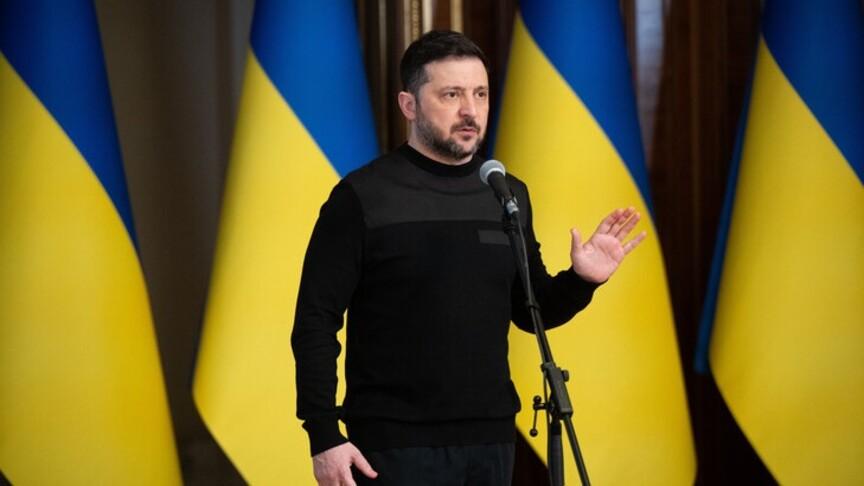
Ukrainian President Volodymyr Zelenskyy on Monday announced that Russian forces launched night attacks on ten Ukrainian regions, resulting in one fatality and eight injuries. According to Anadolu Agency, Zelenskyy used the American platform X to accuse Moscow of sending "multiple signals" indicating its readiness to significantly expand the scope of the war.
In detail, the Ukrainian President emphasized that Russia's harsh and deliberate attack on Zaporizhzhia last night caused five injuries and destroyed two nine-story residential buildings, along with a university facility, a commercial center, and a power generation station. This destruction forced some residents to evacuate their areas. In Kharkiv region, a woman was killed in a drone attack while three other people were injured.
Zelenskyy said: "Russia is not retreating from its escalation and sends many signals proving its readiness to expand the war," adding that all this is happening while world stability has already been undermined by this militaristic tendency. He also confirmed that Ukraine will discuss joint peace efforts during the high-level week of the United Nations General Assembly in New York, noting that this is "the main task that all leaders must work on."
On his part, the Russian Ministry of Defense announced that its forces launched drone attacks against Ukrainian logistics centers, warehouses, and ports, as well as ships suspected of being used to support forces in Kyiv and Odesa regions. The ministry added that its air defenses destroyed 244 drones over Russian territory and the Black Sea during the night, while independent verification of these claims remains difficult due to the ongoing war.
Analysis & context
Analysis & Context
From an analytical perspective, Zelenskyy's statements regarding "signals of readiness to expand the war" reflect a shift in Russian diplomatic rhetoric that could indicate an unprecedented strategic or tactical change since the start of the conflict. Focusing on attacks on major cities like Zaporizhzhia and Kharkiv aims to weaken Ukraine's political and economic will, aligning with theories of psychological warfare and long-term attrition.
In the broader context, the summit of leaders at the UN in New York represents a critical opportunity to reactivate diplomatic mechanisms that have been stalled for long periods. Emphasizing balancing military pressure through long-term sanctions with the diplomatic path highlights Ukraine's need for tangible international support to prevent the conflict from turning into a total war potentially involving other parties or wider geographical areas beyond current borders.
Furthermore, Moscow's announcement of destroying a large number of drones over its territory and the Black Sea reflects relative success in air defense, but it does not negate the reality of continued attacks on critical infrastructure. The difficulty of independently verifying these figures confirms the complex nature of information in active conflict zones, where media narratives from both sides compete to confirm each other's achievements and weaken the opponent's image.
Finally, targeting ports and logistics warehouses indicates a systematic Russian attempt to cut vital supply lines that Ukrainian forces rely on in areas such as Kyiv and southern Ukraine. This type of operation aims to create internal crises that may force civilians and military personnel to abandon strategic positions, opening the door to negotiations or unprecedented geopolitical changes in the history of the current conflict.