Sourced fact
The News
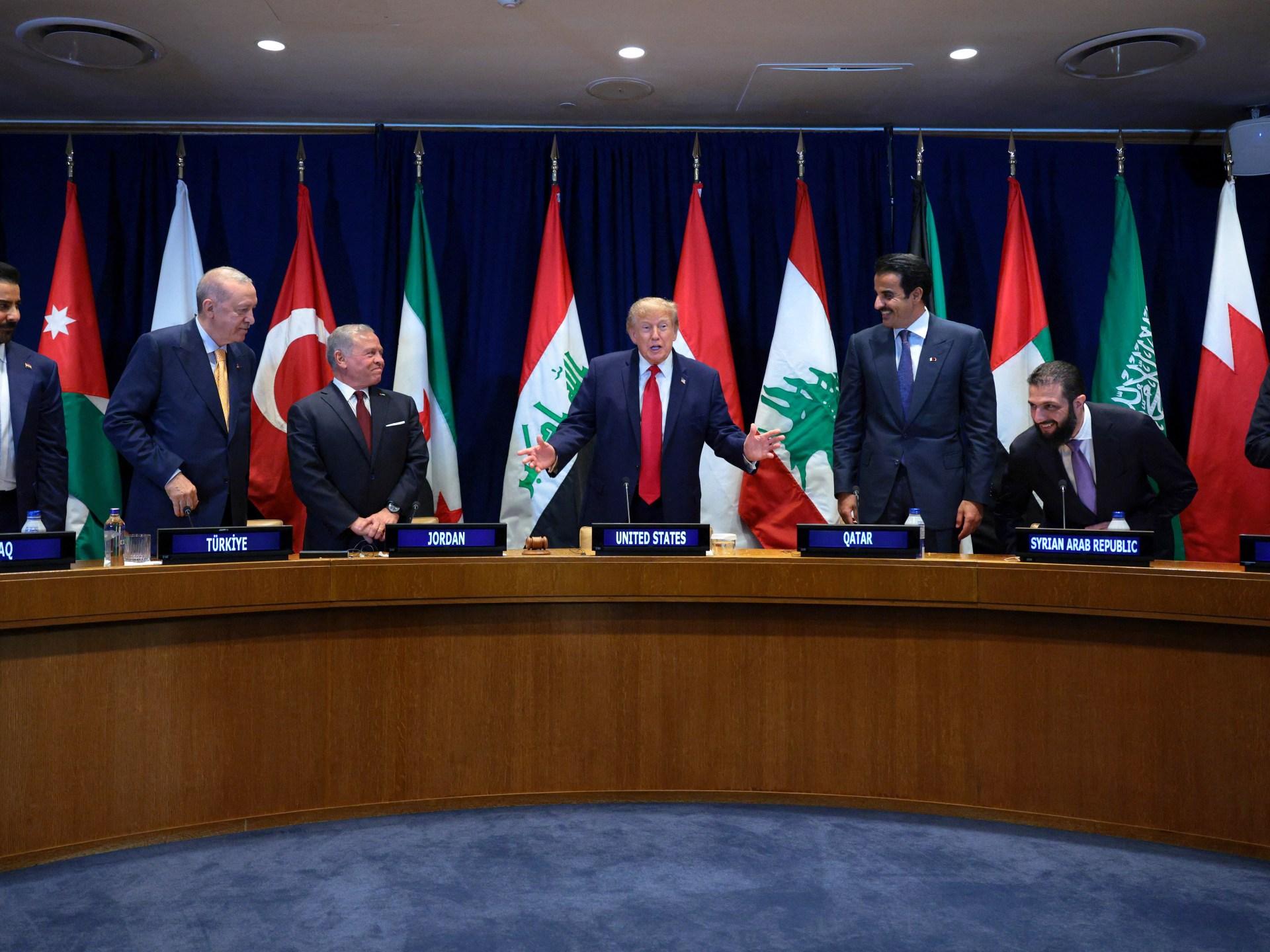
US Secretary of State Marco Rubio warned that Iraq faces the risk of fragmentation or what is known as "Balkanization" unless its armed factions are brought under government control. He made these remarks on Wednesday in New York. The warning came after Rubio met with Iraqi Prime Minister Ali al-Adadi late Tuesday at the sidelines of the UN General Assembly. The US Secretary confirmed that Washington does not doubt Adadi's commitment to arming the factions but described the task as massive and extremely difficult.
Rubio stated that at least three armed factions have handed over their weapons and integrated with the national government, while one faction has been far less cooperative. He pointed out that bringing all weapons under government control means ending the existence of independent forces that operate and contribute to dividing the country. Analysts questioned whether this disintegration is a real danger or merely a pressure tactic. Pasero Ouzslik from the Royal Institute for Services clarified that Rubio refers to the risk of Iraq failing to transform into a stable central state outside Iranian intervention.
Ouzslik noted that armed factions act as channels for imposing the Iranian regime's demands inside Iraq through economic, political networks, and oil smuggling. Zeidon Alkenani described the warning as possibly indicating a limited understanding by the US administration of the region. Alkenani called for patience and political sensitivity because the process requires a long time and could quickly stall without it.
The report continued that most armed factions fall under the umbrella of the Popular Mobilization Forces, which maintained close ties with Iran despite some of its wings officially integrating into security forces. The strongest Iran-aligned factions, such as Kataib Hezbollah and the Sadr Movement, rejected handing over what they call resistance weapons. Hadi Al-Amiri, commander of Badr, stated that the decision to submit weapons is purely an Iraqi decision.
Rubio also revealed that some recent attacks on energy infrastructure in the region were carried out by armed factions aligned with Iran, not just the Houthis. Ouzslik acknowledged the role of these militias in instability during the confrontation between the US and Iran, while Iranian airlines face new US sanctions preventing them from serving Iraqi airports.
Analysis & context
Analysis & Context
From an analytical perspective, the term "Balkanization" in the context of Iraq does not necessarily mean immediate regional division along ethnic or sectarian lines as happened in previous countries. Instead, it refers to the state's failure to build stable central institutions capable of absorbing armed groups and reducing indirect Iranian influence. These groups pose a structural challenge that has become entrenched within the Iraqi federal system since 2014, following the formation of the Popular Mobilization Forces to fight ISIS. Many of their factions have maintained a separate command structure and close ties with Tehran.
In the broader context, the disarmament decision represents a sensitive political turning point in modern Iraqi history, aiming to transform the identity of armed groups from "external resistance" to "Iraqi patriotism." This faces major obstacles due to the intertwined economic and political interests managed by these factions. Moreover, the timing of this warning comes amid escalating regional tensions between Iran and the US, where Iran-backed armed groups play a direct role in destabilizing operations, such as targeting energy infrastructure in Gulf countries.
Regarding the economic and security context, the continued flight of some Iranian airlines to Iraq despite new US sanctions highlights the complexity of the situation. Local companies in Najaf rely heavily on these religious and economic links, making any decision to close airports politically and economically difficult. The greatest challenge now is the Iraqi government's ability to distinguish between groups that can be sincerely integrated and those that will continue to operate outside legal frameworks, especially with the upcoming withdrawal of US troops, which could completely alter the security equation.