Sourced fact
The News
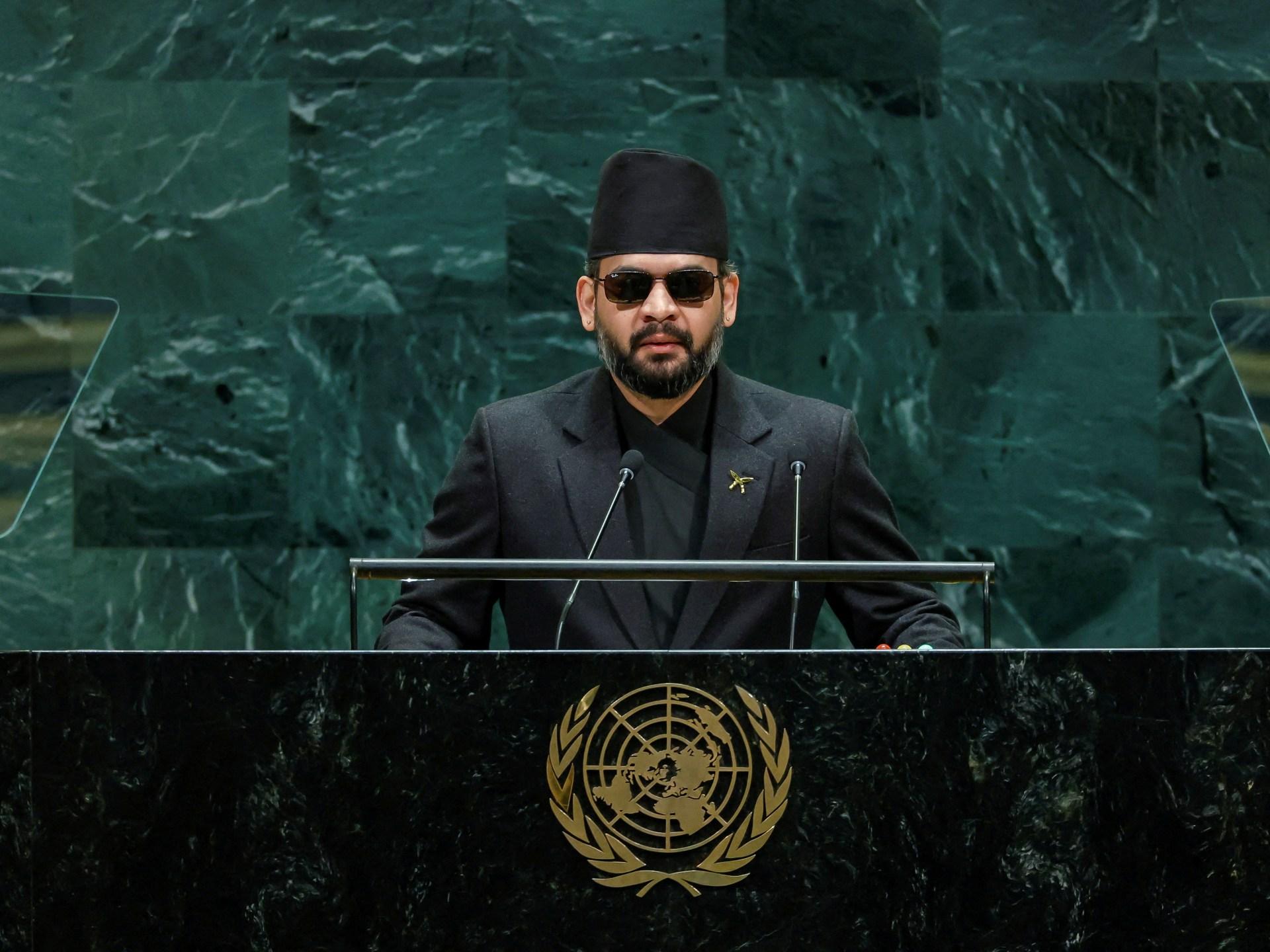
Nepal's Prime Minister Balen Shah issued an urgent call to world leaders to act against the escalating threat of climate change, describing last month's floods that devastated his country as a "warning to the world." He delivered this appeal during his address to the 68th session of the UN General Assembly in New York on Thursday evening, emphasizing that the August disaster was not merely a local tragedy but a message for the entire globe.
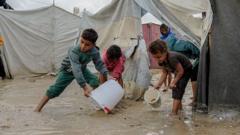
According to Al Jazeera Net, Shah criticized political leaders for having been "lenient" in translating these warnings into practical measures with the speed and scope needed by vulnerable populations. He pointed out that the floods caused by landslides of mud, rocks, and water in northern Nepal and at the China-Tibet border crossing on August 26, which resulted from glacial melting, claimed at least 1,453 lives according to official statistics.
The Prime Minister explained that a research team from the group "World Weather Attribution" released a report last week clarifying that the disaster was not caused by a single extreme weather event, but rather a "composite crisis" shaped by long-term warming, glacial retreat, permafrost thaw, and geological instability. He also revealed that 5,500 people remain missing while 13,795 others were rescued, confirming that Nepal contributes less than one-tenth of one percent to greenhouse gas emissions and that 99 percent of its electricity comes from hydropower.
Shah called on the international community to bear the costs of helping Nepal adapt to climate change and proposed establishing a "Himalayan Resilience Mechanism" including Nepal and its neighbors India and China to exchange data and monitoring equipment. He also requested funding of $20 million from the UN Loss and Damage Fund established in 2022 following the catastrophic floods in Pakistan, while the government estimated the initial cost of the disaster at $5 billion.
Analysis & context
Analysis & Context
From an analytical perspective, this appeal represents a significant turning point in the international debate over the responsibility of industrialized nations for climate disasters striking developing countries that have contributed negligibly to carbon emissions. Describing the crisis as a "composite crisis" highlights the complexity of modern climate phenomena that transcend national borders and require broad regional cooperation beyond traditional diplomacy.
In the wider context, the UN Loss and Damage Fund represents a critical test of international seriousness in addressing climate change impacts, especially after its delayed first disbursement despite the urgent need in fragile states like Nepal, which relies almost entirely on clean energy. Failure of this fund to provide adequate support could threaten a collapse of trust in the international climate system and lead to escalating geopolitical tensions over resources and aid.
The idea of establishing a joint mechanism between India, China, and Nepal reflects an attempt to transform regional competition into strategic cooperation to address shared environmental challenges in the sensitive Himalayan region, where glacial melting there affects billions of people across South and Southeast Asia. This initiative could open new avenues for technical and scientific cooperation between major and minor powers in confronting one of humanity's greatest existential threats.
Finally, the United States' additional commitment of $31 million shows a significant gap between political commitments and field reality, where the required funding remains far short of the scale of destruction left by the glacial collapse and floods that submerged tunnels and affected thousands of workers. This financial gap underscores the urgent need to restructure international financing mechanisms to be faster and more efficient in confronting sudden disasters.