Sourced fact
The News
After four weeks of sudden catastrophic floods that devastated Nepal, Prime Minister Pushpa Kamal Dahal 'Pushpa' Shah stood before the UN General Assembly to call on world leaders to cooperate in protecting the Himalayas amidst the climate crisis. He clarified that these mountains are not marginal to the planet but are part of the global life-support system, calling for the establishment of a Himalayan Resilience Mechanism led by Nepal, India, and China to share data, ethics, and monitor dangerous glacial lakes.
The Prime Minister emphasized that his country contributes less than 0.1% of global greenhouse gas emissions, adding that while Nepal did not create this crisis, it is paying an exorbitant price for it without blaming any specific country or continent. He pointed to the necessity of transforming the Himalayas into a laboratory for international cooperation rather than becoming borders for fragmented information, urging everyone to recommit to shared responsibility and solidarity.
Shah called on poor nations not to bear additional debts to recover from climate disasters, confirming that answering the destruction of infrastructure cannot be merely through massive loans or sporadic aid packages but requires global support based on grants. This speech delivered at the 48th session of the UN General Assembly was the first time the youngest head of government, aged 36, had spoken on this global issue.
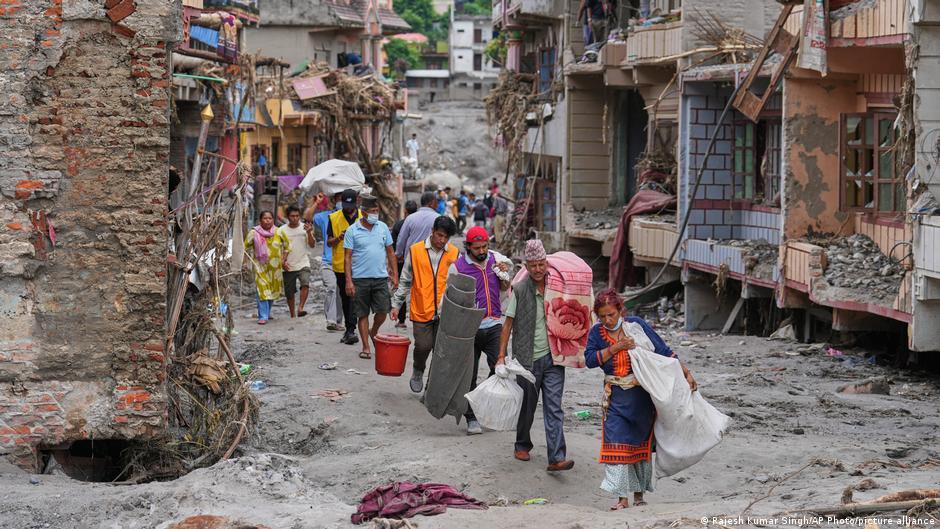
The assembly recalled the details of the disaster that occurred on August 26 when ice collapsed near the border between Nepal and the Chinese region of Tibet, triggering landslides and sudden floods that destroyed entire villages and forced people to crawl through hydroelectric power tunnels to reach rescuers. More than 6,000 people remain missing as search and rescue efforts continue in the affected areas where villages have turned into ruins under thick mud.
Analysis & context
Analysis & Context
From an analytical perspective, Nepal's stance at the General Assembly reflects a fundamental shift in international climate discourse from mere environmental debate to a humanitarian, existential security issue requiring urgent response. The Himalayas are not just a mountain range but a massive water reservoir feeding rivers that sustain multiple peoples, making them extremely sensitive to any disruption in the global climate system.
In the broader context, Nepal's request for grants instead of loans represents a turning point in the international disaster finance equation, where developing nations seek to avoid the debt trap they may fall into while recovering from natural disasters. This demand aligns with climate justice principles which affirm that industrialized countries are historically responsible for a significant portion of emissions while poor nations bear the brunt of devastating impacts.
Furthermore, the call to establish a joint mechanism between Nepal, India, and China indicates an attempt to overcome traditional geopolitical tensions in the region in favor of specific regional cooperation to protect the environment. This collaborative approach is essential especially given the increasing risks of glacial lakes that may burst suddenly and cause catastrophic floods across national borders.
Finally, the term "Himalayan Flood" used by global media to name this disaster highlights the unique nature of these events which resemble tsunamis but occur within mountains due to rapid ice melting. This new concept helps in understanding the nature of increasing risks facing mountainous regions worldwide amidst rising global temperatures.