Sourced fact
The News
Democratic members of the U.S. Senate condemned President Donald Trump's decision to bar journalists from CNN, MSNBC, and Politico from accessing the White House, which led to the suspension of joint television broadcasts covering presidential events. Representative Ed Markey stated that press freedom is essential to the United States' democracy and that this action threatens these fundamental freedoms.
Senator Dick Durbin explained that the president's order was an explicit attack on the First Amendment of the U.S. Constitution, emphasizing that democracy relies entirely on a free and open press. He added that the Supreme Court may soon rule against the decision if it continues to affect media institutions' operations.
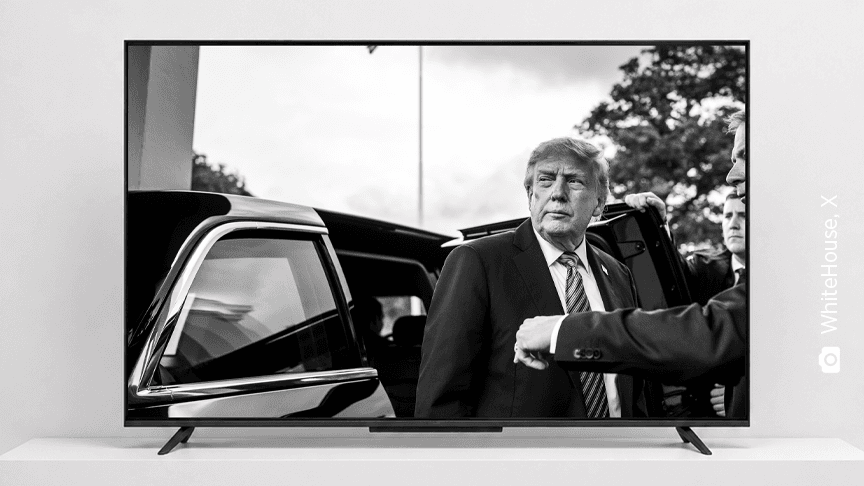
The remaining television channels in the broadcast consortium stated they refused to participate in joint coverage after CNN was prevented from performing its scheduled duties, resulting in no audio of the president during the inauguration ceremony for a new helicopter pad at the White House West Wing. The broadcast showed only footage of the president cutting ties and speaking with construction workers without his voice or words being heard by the audience.
Trump stated that "fake news poses a threat to democracy" and declared he would do whatever is necessary to ensure the prosperity of the United States, while the three channels filed a lawsuit against the president and his administration, alleging that the restrictions violate constitutional rights.
Analysis & context
Analysis & Context
From an analytical perspective, this ban represents a watershed moment in the relationship between the executive branch and the American press, shifting from a period of tension to a direct legal confrontation that threatens the principle of separation of powers and the right to public oversight. Describing media outlets as "fake news" and directing them to do whatever is needed to ensure the country's prosperity reflects an escalation in political rhetoric that could fundamentally alter the American media landscape.
In a broader context, press freedom in the United States has historically been a cornerstone of the democratic system since its founding, and any previous attempt to restrict this right has sparked extensive legal debate in the Supreme Court. However, using presidential executive authority to prevent journalists from entering the official work site raises fundamental questions about the limits of power under the U.S. Constitution and its modern interpretations.
Additionally, the suspension of joint broadcasts for presidential events highlights the fragility of the collective media infrastructure in the United States, where many major channels rely on a rotating broadcast system to efficiently cover important events. This interdependence means that interfering with one channel's operations negatively affects the entire media system's ability to comprehensively and transparently cover national events.