Sourced fact
The News
Russia announced it had recorded the largest drone attack on Ukraine since the start of the war, with the historic bridge connecting Russia to the occupied Crimean peninsula sustaining minor damage while several oil refineries were targeted. Russian sources reported that the Russian military destroyed 2,049 drones and four Flamingo missiles within 24 hours, while Moscow Mayor Sergey Sobyanin noted that approximately 600 of them headed solely toward the capital.
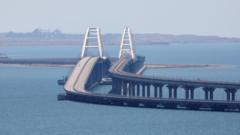
In contrast, Kyiv experienced its highest number of air raid alerts in a single day, reaching 17 alerts, and Russian attacks on energy infrastructure resulted in seven deaths and power outages affecting 50,000 people. Authorities in Moscow-controlled Crimea confirmed that drones struck the bridge, also known as the Kerch Bridge, leading to traffic restrictions, while Kremlin spokesman Dmitry Peskov stated that the West is hesitating to facilitate peace talks.
The bridge was built by Russia after its invasion and annexation of the peninsula in 2014 and was officially honored by Russian President Vladimir Putin in 2018, enjoying multi-layered defensive protection. Russian military analysts on a Telegram platform denied that the attack was direct, suggesting damage resulted from debris from drone warheads, while neither Ukrainian internal security services nor military intelligence responded to a BBC request for comment.
Ukrainian drones also attacked other energy facilities, including an oil refinery in Elski in southern Krasnodar, where fires broke out due to drone debris and six people, including children, were injured. In another development, Ukrainian President Volodymyr Zelenskyy accused Russia of conducting a coordinated operation targeting Ukraine's bridges with the aim of dividing the country and making life difficult for residents on both banks of the Dnieper River.
Despite talks between American, Ukrainian, and Russian delegations aimed at ending the war, prospects for peace remain distant due to Moscow's insistence on demanding Ukraine cede territory and withdraw from NATO accession efforts. The Kremlin also revived discussions about rethinking Europe's "security architecture," a term Moscow uses to advocate reducing NATO presence in countries near Russia, raising concerns among European partners who fear Washington and Moscow might redraw the continent's security map without their involvement.
Analysis & context
Analysis & Context
From an analytical perspective, targeting the Kerch Bridge poses a significant challenge to Russian defenses, which have made immense efforts to protect this strategic structure that symbolizes the connection between Russia and its territory in the peninsula. Although damage was minor compared to previous attacks, the repetition of such strikes indicates a shift in Ukraine's tactics for targeting critical infrastructure.
In the broader context, international diplomacy continues to seek a political solution despite ongoing fierce ground fighting. American delegations visited both Moscow and Kyiv to mediate ceasefire efforts, yet Moscow remains uncompromising on its demands that Ukraine cede territory and abandon NATO accession aspirations.
A shift in European posture is also evident, with countries such as Britain, France, Germany, Italy, and Poland beginning to speak as a bloc with the European Union to discuss restructuring European security—a move that alarms Moscow, which views this as potentially diminishing its strategic role on the continent.
It appears the war has entered a new phase of escalation, with attacks now extending to energy infrastructure and vital bridges, thereby increasing civilian suffering and complicating peace negotiation efforts.