Sourced fact
The News
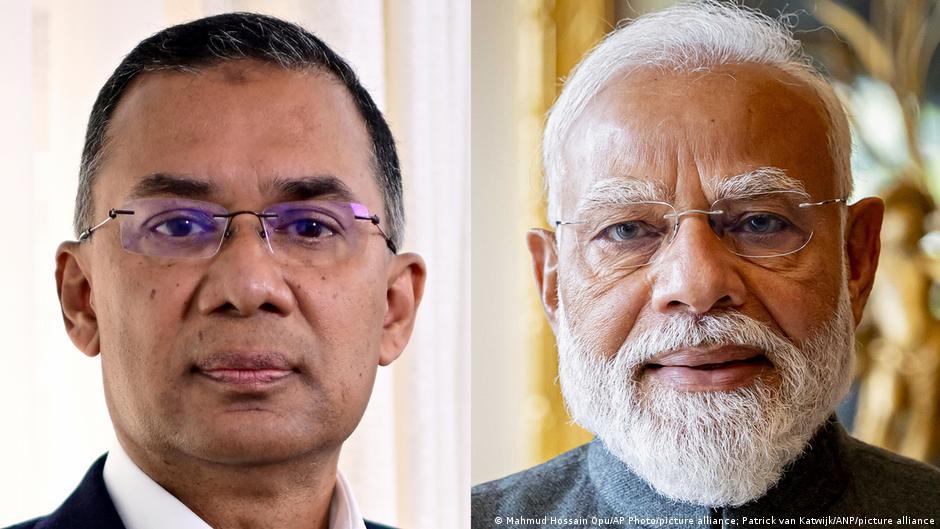
Last month, the Prime Minister of Bangladesh, Tarik Rahman, attended the BRICS leaders' summit in New Delhi without an official invitation as a state leader, sparking debate over whether this was an insult or merely a formal procedure. Reports indicate that the Indian government sent one invitation for him to attend a BIMSTEC initiative session focused on countries bordering the Bay of Bengal, while rejecting his official invitation as a government official in Bangladesh, which is not a member of BRICS. This stance is seen as a continuation of tensions between the two countries since the resignation of former Prime Minister Sheikh Hasina in 2024 following widespread public protests.
Hasina's presence in India is considered a major obstacle to normalizing relations, as she was sentenced in absentia to death by an Indian court for crimes against humanity linked to confronting the protests that led to her downfall from power. Bangladesh has called on India to hand her over to justice, while Hasina rejected the ruling, considering it politically predetermined. Sources indicate that bilateral relations reached their lowest point after Hasina's resignation, with visa services restricted and disputes erupting over border management and the treatment of undocumented migrants.
Political analyst Zafar Subhan stated that Bangladesh will now deal on an equal footing and will not accept any preconditions from New Delhi. He added that the best way to restore trust is to prevent Hasina from making controversial statements in India and not allow her to undermine Bangladesh's stability. Expert Shanthie Mariett de Souza also pointed out that Bangladesh is seeking to diversify its relations with China and Pakistan to achieve greater independence away from New Delhi's strict pressures.
Experts highlight the importance of the Chinese factor in the regional equation, as Beijing has become Bangladesh's largest trading partner and a primary weapon supplier since Doha joined the Belt and Road Initiative in 2016. Subhan emphasized that India must separate the Hasina file from other bilateral issues such as water and trade to avoid pushing Bangladesh toward full alignment with China. Analyst Shabir Inam Khan also noted that India relies on Bangladesh's good neighborhood for its economic and strategic security, especially given the large trade surplus in its favor.
Geographic data show that the two countries share a long border of 4,096 kilometers, and Bangladesh heavily depends on India for trade routes, energy, and regional connectivity. Despite this mutual dependence, disagreements over the Teesta River water-sharing treaty, which will expire in December, remain an obstacle to full cooperation. Experts conclude that building trust requires ending Hasina Party's activities in India, resolving pending disputes, and lifting trade restrictions imposed after 2024.
Analysis & context
Analysis & Context
From an analytical perspective, the issue of Hasina in India is the biggest obstacle to normalizing bilateral relations, as Dhaka sees her presence as a threat to internal security and democratic governance stability in Bangladesh. Additionally, the failure to sign the Teesta River water-sharing agreement between the two countries adds another layer of geopolitical and economic complexity to the tense relations.
In the broader context, Bangladesh is now seeking to diversify its alliances beyond exclusive reliance on India, while strengthening its strategic and economic partnership with China, which has become the country's largest trading partner since joining the Belt and Road Initiative in 2016. Experts indicate that New Delhi must separate the Hasina file from other bilateral issues such as water and trade to rebuild trust once again.
The geographic analysis also highlights that mutual dependence between the two countries in areas of energy, infrastructure, and cross-border connectivity through long borders makes any complete separation impractical, even though Bangladesh is now seeking greater equality in diplomatic treatment with New Delhi.