Sourced fact
The News
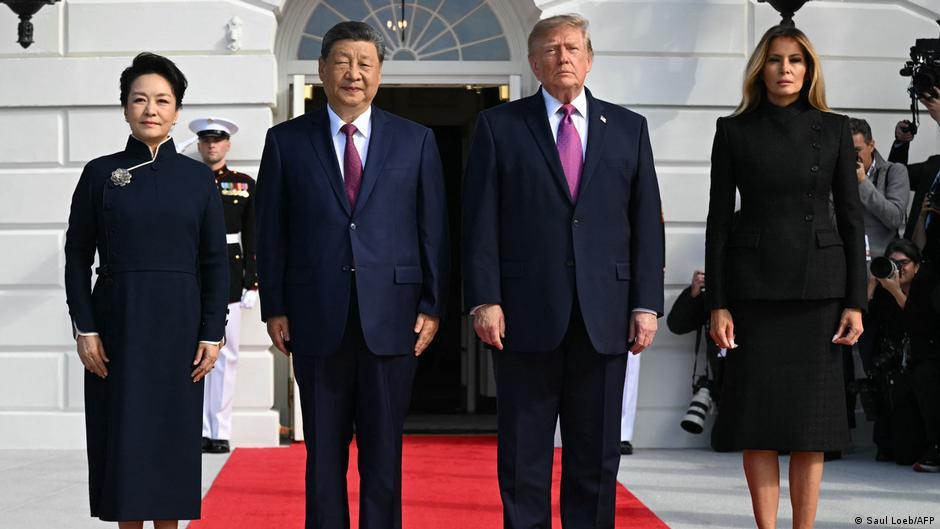
Chinese President Xi Jinping concluded his visit to the United States after three days of diplomatic exchanges that included official meetings and dinners at the White House, without achieving a breakthrough in trade tensions or strategic issues. US President Donald Trump described the summit as a "friendship, strength, and success party" for all parties involved, while Xi confirmed that both countries would prepare for two additional meetings this year: first at the ASEAN Summit and then at the G20 Summit in Florida.
The White House spokesperson clarified that during the final round of talks, President Trump and President Xi discussed the war in Iran and ways to reopen the Strait of Hormuz, with Trump indicating that both sides expect significant results on this file. It was also confirmed that both sides agreed to resume some US exports, such as agricultural products and medical devices to China, while excluding certain high-quality chips requiring special licenses from the scope of this temporary agreement.
Xi Jinping stated that relations between the United States and China must be based on strategic stability founded on respect, equality, and justice, explaining that both parties agreed to add new content to bilateral relations. In contrast, Trump expressed his belief that both sides had made huge positive steps during the visit, especially in the absence of any real breakthrough in files such as trade and tensions around artificial intelligence, as noted by Deutsche Welle.
The visit concluded with a joint tour by both presidents and their spouses to the National Archives Museum, where they reviewed historical documents including the Declaration of Independence and the Constitution, before Xi departed Washington returning to Beijing. Amidst the event, a massive official reception took place attended by leaders of major US tech companies such as Elon Musk, Jeff Bezos, Sam Altman, and Mark Zuckerberg, on an occasion Trump described as "the hottest ticket in town."
On the other side of the diplomatic scene, hundreds of protesters gathered outside the White House to express their rejection of the Chinese president's visit, demanding protection for minority rights in Tibet, Xinjiang, and Hong Kong, and calling for an end to interference in Taiwan affairs. Despite these local protests, media focus remained on economic and trade details that would be officially announced on Monday by US Trade Representative Robert Lighthizer, who confirmed continued progress in negotiations.
Analysis & context
Analysis & Context
From an analytical perspective, this visit reflects a Chinese-American attempt to redefine the nature of bilateral relations away from the competitive confrontational model that prevailed in recent years. While both sides used friendly diplomatic language and exchanged mutual expressions of appreciation, reality indicates that structural tensions continue to make achieving real progress on files such as trade and artificial intelligence complex, requiring sustained political will.
In a broader context, the importance of this visit emerges as a transitional phase in international relations where the United States and China seek to establish new rules for economic and strategic coexistence. Announcing dates for upcoming meetings reflects Chinese-American desire to maintain open communication channels even amidst severe differences, especially with the expiration of the temporary trade agreement that was scheduled to end last November.
Reports also indicate the participation of senior US technology sector leaders such as Elon Musk and Mark Zuckerberg in the official dinner, highlighting the central role of the tech sector in the future relationship between the two countries. Focusing on regulating artificial intelligence and digital trade becomes pivotal amidst rapid technological developments that directly affect national security and the global economy.
Finally, despite official celebrations and diplomatic visits, opposition demonstrations continued in Washington demanding human rights and religious freedom in China, reminding us that international relations are not limited to summits alone but are also influenced by field realities and domestic public opinion. Balancing economic cooperation with political concerns remains the greatest challenge facing decision-makers in both countries.