Sourced fact
The News
At the conclusion of the general debate of the seventy-first session of the United Nations General Assembly, German Foreign Minister Johann Wadiboul met his Russian counterpart Sergey Lavrov on the sidelines of the summit for the first time since Russia's invasion of Ukraine in 2022. Although the German minister described the discussion as extremely tense, both sides confirmed that deep disagreements persist without any tangible progress toward resolving the conflict.
Wadiboul clarified that the meeting did not yield consensus on key points, noting that he offered to ease tensions regarding Ukraine but Russia has not yet listened to him. He also stated firmly that Germany will not accept any incidents such as attempts to attack Leipzig Airport with a drone, considering this a dangerous escalation that must be stopped immediately.
On his part, Lavrov described the meeting as unnecessary and said he heard nothing different from Berlin's public stance on the ongoing war in Ukraine. He added that Germany provides the greatest support for Ukraine and called on all member states to persuade Russia that the future is built at the negotiation table, not on the corpses of civilians in cities and villages.
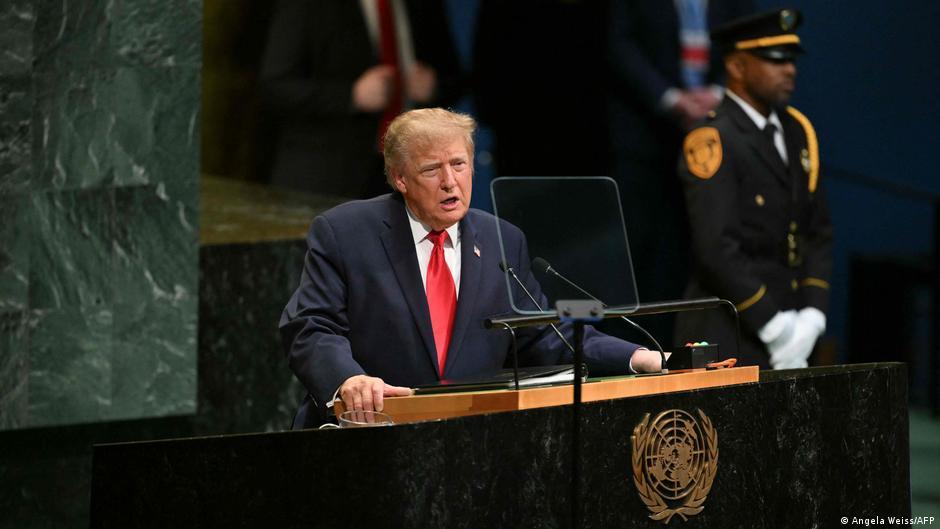
In a separate address before the General Assembly, Wadiboul warned of the enormous dangers posed by artificial intelligence and outlined new rules that could threaten the infrastructure of global societies. He also called for deep reforms within the United Nations to counter the erosion of international institutions amid the rise of nationalism and increasing geopolitical tensions among major powers.
He also urged Russia to abandon its dangerous escalation path toward Germany, Europe, and NATO, reaffirming that hybrid attacks will not change Germany's resolve to support Ukraine. In another context, India called for a reduction in tensions in the Strait of Hormuz and the Red Sea to ensure freedom of maritime navigation and regional stability.
Meanwhile, China's Vice President Han Cheng expressed condemnation of unilateral military actions and called on major powers to adhere to international laws. Today's final session will also see a strong statement from the United Arab Emirates regarding the crisis in the Middle East, while North Korea's representative may deliver another attention-grabbing speech.
Analysis & context
Analysis & Context
From an analytical perspective, Wadiboul's speech comes within the context of a rare meeting with his Russian counterpart Sergey Lavrov on the sidelines of the General Assembly—the first between them since the start of Russia's invasion of Ukraine in February 2022. Although the gathering was described as "sharp" and revealed deep divisions between the two countries, it reflects a diplomatic effort to restore communication channels despite failing to achieve tangible progress or agreement on core issues of mutual interest.
In the broader context, Germany's role as Ukraine's largest supporter and a key defender of international values at the General Assembly stands out. It faces dual challenges: while striving to maintain cohesion within the Atlantic Alliance with Russia, it also seeks to address emerging risks such as artificial intelligence, which require global cooperation that transcends traditional geopolitical divisions.
Additionally, coverage highlights growing international concern over other crises, including tensions in the Strait of Hormuz and the Red Sea. India and Saudi Arabia have both called for de-escalation there, reflecting a shift in international security priorities toward protecting maritime navigation and stabilizing the Arab region, which has become a focal point of global competition.