Sourced fact
The News
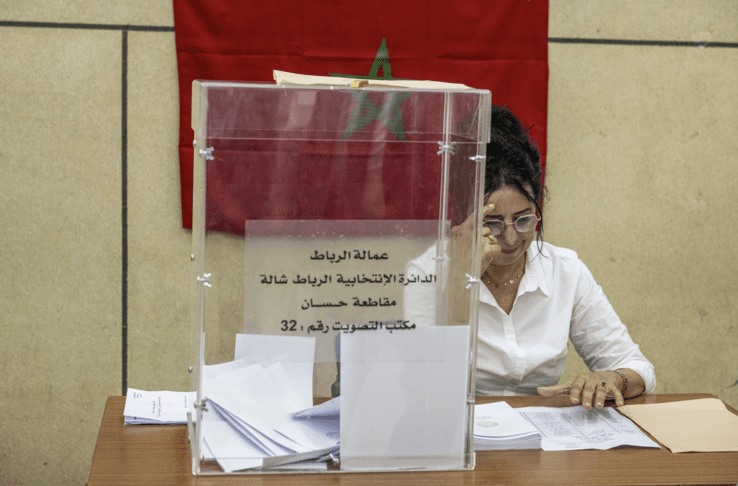
The vote counting process for the Moroccan parliamentary elections began on Wednesday following the closure of polling stations, where over 15.8 million voters cast their ballots for a candidate to the House of Representatives, composed of 395 seats. Morocco's Ministry of Interior expects to announce preliminary results in the early morning hours of Thursday, while voter participation reached approximately 28.05% by 5 PM under normal conditions, according to Anadolu Agency.
The electoral process was overseen by 3,206 observers, including 200 foreign observers, during voting that ran from 8 AM to 7 PM Greenwich Mean Time. Twenty-eight political parties submitted 1,850 lists comprising 7,288 candidates, of whom 2,658 were women. It is worth noting that the registered voter turnout for this round stands at 15,801,162 people, following the 2021 elections which saw a participation rate of 50.18%.
Article 47 of the Moroccan Constitution stipulates that the King appoints the Prime Minister from the party winning an absolute majority of seats; however, securing an absolute majority requires 198 seats, which may open the door for coalition talks if no single party achieves this threshold. The upcoming government will face political, economic, and social challenges, in addition to major projects linked to preparing Morocco to host the 2030 FIFA World Cup with another nation.
The winner of the 2021 elections was an alliance of independents who secured 102 seats, followed by the Party of Justice and Development with 86 seats and the Independence Party with 81 seats. Currently, Aziz Akhannouch, head of the Independent Alliance, leads the current government.
Analysis & context
Analysis & Context
From an analytical perspective, the decline in voter participation compared to previous parliamentary elections held in September 2021, which recorded a turnout of 50.18%, raises questions about the level of electoral enthusiasm or socio-economic conditions that may have influenced voters. Sources have indicated that the next government will face significant political, economic, and social challenges, in addition to massive projects linked to preparing Morocco to host the 2030 FIFA World Cup with another country.
In a broader context, these elections represent a critical milestone in Morocco's political landscape as the balance between traditional and modern parties such as the Justice and Development Party and the Authenticity and Modernity Party is being formed. Previous coalitions played a pivotal role in shaping the current government led by Aziz Akhannouch of the Constitutional Union Party, along with his alliance with the Authenticity and Modernity Party and the Independence Party, highlighting the dynamics of parliamentary work in Morocco.
Moreover, Morocco's preparation to host the 2030 World Cup adds a new dimension to the challenges facing the new government, as it requires massive investments in infrastructure, security, and environmental sustainability; this factor may also influence the electoral program priorities of participating parties.