Sourced fact
The News
Saudi-backed Yemeni government forces withdrew today from the strategically vital area overlooking the Bab al-Mandab Strait, leaving control to the Iran-backed Houthi movement. The Yemeni army announced it is redeploying its troops from this critical maritime corridor in the southern Red Sea to defend the interim capital Aden, which has become a top priority. This move follows a weeks-long offensive in which loyalist forces sought to regain critical territory seized by the Houthis in a surprise raid last September.
A statement from Southern Army forces said the withdrawal from Dhab Airport and the Bab al-Mandab area was aimed at strengthening front lines and addressing existing threats. Reuters quoted the source as saying the decision was made to reinforce fronts, while Houthi-affiliated media reported Sunday that the group had seized the territory. Saudi Arabia did not comment on this latest military development.
A Houthi spokesperson indicated that the group does not pose a threat to international shipping passing through the strait since taking control of it, but will continue to target vessels belonging to Saudi Arabia. Control of the area has caused a sharp rise in global oil prices because Saudi Arabia relies on the Red Sea for exports after the Strait of Hormuz was effectively closed due to the war between Israel, the United States, and Iran.
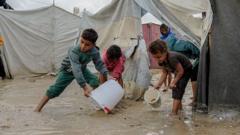
Yemen is witnessing a humanitarian catastrophe, with nearly 330,000 people displaced as fighting intensified, killing hundreds. The conflict dates back to 2014 when the Houthis overthrew the government from the capital Sana'a, escalating in 2015 after a Saudi-led Arab coalition intervened to restore the government's rule.
The informal ceasefire that lasted four years began to crumble last July when the Houthis declared a "naval blockade" against Saudi Arabia and launched missile and drone attacks on airports, oil facilities, and ships in the Red Sea. The Houthis stated they were responding to Saudi blockades of ports and airports on their territory as well as an aerial attack on Sana'a airport, which they blamed on the kingdom.
Analysis & context
Analysis & Context
From an analytical perspective, this withdrawal represents a major shift in the balance of power in Yemen, with control of a vital global trade maritime corridor moving from government loyalist forces to the Houthis. This decision reflects a strategic reorientation that is reprioritizing military efforts away from direct confrontation at Bab al-Mandab in favor of defending Aden.
In the broader context, the Yemeni conflict stems from the civil war that began in 2014 when the Houthis overthrew the government from the capital Sana'a. The situation worsened with Saudi-led Arab coalition intervention in 2015 to restore the government's rule, leading to a prolonged war that displaced hundreds of thousands of people.
The United Nations estimated that nearly 330,000 people had been displaced in Yemen as fighting intensified, with hundreds reported killed. This crisis contributed to rising global oil prices because Saudi Arabia relies on the Red Sea for exports after the Strait of Hormuz was effectively closed due to the war between Israel, the United States, and Iran.
Additionally, the informal ceasefire that lasted four years began to crumble last July when the Houthis declared a "naval blockade" against Saudi Arabia and launched missile and drone attacks on airports, oil facilities, and ships in the Red Sea.