Sourced fact
The News
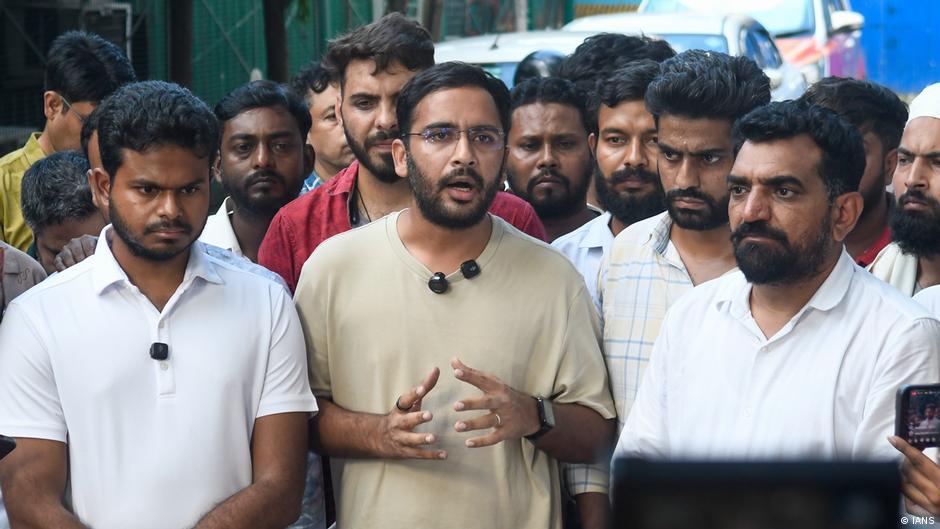
Deutsche Welle reported that police in the Indian state of Assam have arrested Constitutional Bench member Ashutosh Ranca during his visit to the state, according to a post shared on X by Ganta Party founder Kokroach Abheet Debik on Sunday.
In another instance of social tensions, students at Satyajit Ray Film and Television Institute in Kolkata stated they were subjected to a violent attack after objecting to a meeting organized by a hard-right group within the university campus.
The agency noted that a fight broke out between students and members of the Akhil Bharatiya Grahak Panthayat (ABGP) when the student union confronted the uninvited group, escalating into assaults where attackers used knives against the students.
A student from Masika, known as Bunder, told Deutsche Welle that the event was organized by the Rashtriya Swayamsevak Sangh (RSS), described as a Hindu right-wing organization, and that students opposed the meeting because they viewed it as direct advocacy for the organization's agenda rather than a cinematic presentation.
Additionally, Prime Minister Narendra Modi reiterated on Sunday that India adopts a "zero tolerance" policy toward terrorism in preparation for the tenth anniversary of the 2016 attacks on Pakistan, while Defense Minister Rajnath Singh stated that India is prepared for any terrorist strike if neighboring countries continue to support terrorism.
Analysis & context
Analysis & Context
From an analytical perspective, the arrest of Ashutosh Ranca in Assam reflects ongoing acute political tensions between local authorities and independent political activists in Northeast India, where arrests are sometimes employed as a deterrent measure against dissenting voices.
In the broader context, the attacks on Kolkata Institute students indicate escalating conflict within university campuses between students and hard-right organizations such as the RSS, reflecting how religious and social politics influence academic and cultural life in India.
Moreover, Modi's statements and the "zero tolerance" policy toward terrorism point to persistent geopolitical tensions with Pakistan, where Delhi's prosecution links terrorist attacks to internal policies of neighboring countries without providing specific evidence in this context.
Additionally, the severe floods that hit Uttar Pradesh state and resulted in over 56 deaths highlight increasing environmental challenges facing India, as the state recorded unusually high rainfall of 66.5 mm over three days compared to a seasonal average of only 7.6 mm.