Sourced fact
The News
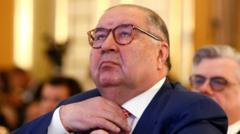
The European Union announced its intention to lift sanctions against two Russian oligarchs who were listed following Russia's full-scale invasion of Ukraine in 2022, sparking widespread anger among Ukrainian authorities. This decision came under diplomatic pressure; French President Emmanuel Macron called for the removal of sanctions on Uzbek-Russian billionaire Alisher Usmanov citing "national security concerns," while Luxembourg demanded the lifting of sanctions on Israeli-Russian businessman Mikhail Fridman, who is suing in his country to unfreeze his assets.
Ukrainian Foreign Minister Andriy Sybiha responded to the move by stating that Moscow is celebrating because it got what it wanted: a sense of impunity and humiliation imposed on the European Union and doubts about its European unity. Ukrainian officials described the measure as "unacceptable" and sending the wrong signal to Russia, urging all EU member states to impose national sanctions instead. Meanwhile, Kremlin spokesperson Dmitry Peskov welcomed the decision, considering EU sanctions illegal and calling for all Russians to be removed from them.
Regarding the financial details of the individuals in question, Usmanov is the founder of the USM investment group, which owns companies producing iron, steel, copper, and MegaFon telecom, with his assets frozen in 2022 as a Kremlin-aligned oligarch. Fridman, who holds both Russian and Israeli citizenship and was born in Ukraine, is the founder of Alpha Investment Group and has major interests in energy and banking; he was described by the EU as a prominent Russian financier and facilitator for Putin's inner circle.
Regional political considerations played a pivotal role in this shift. Latvia initially opposed the decision before agreeing to a compromise involving extending sanctions on nearly 3,000 individuals and another entity for three years instead of renewing them every six months. Latvian Prime Minister Krišjānis Kariņš announced his agreement with France to begin talks about Latvia joining the French nuclear deterrence initiative and enhancing the French military presence in the country as part of this agreement.
Analysis & context
Analysis & Context
Analytically, this decision poses a significant challenge to the European Union's foreign policy and its sovereignty in imposing economic sanctions on Russia, opening the door to widespread criticism that the EU may be weak-willed or subject to undisclosed external pressures. The decision to lift sanctions on oligarchs is linked to specific commercial and strategic interests of certain European countries, reflecting internal tensions between member states' national security interests and unity in the face of Russian aggression.
In a broader context, these events indicate that the war in Ukraine has no longer just an military conflict but has transformed into a complex web of geopolitical transactions affecting the stability of the European Union and its global standing. The Kremlin's response by praising the decision and characterizing sanctions as illegal reflects a Russian strategy aimed at undermining the credibility of European institutions and encouraging them to back down under external economic or political pressure.
The shift in Latvia's position from rejection to conditional approval highlights how bilateral interests with countries like France can override a unified stance toward Russia, weakening the EU's ability to provide a unified and consistent response to increasing security challenges. Extending sanctions on others for three years instead of six months may be an attempt to compensate for alleged losses in sanction credibility by making them more stable and stringent in the long term.
Finally, France's announcement of its willingness to discuss Latvia joining the nuclear deterrence initiative highlights radical changes in the European security equation, as countries like Latvia seek to strengthen traditional allies to ensure their security amidst continued direct Russian threats.