Sourced fact
The News
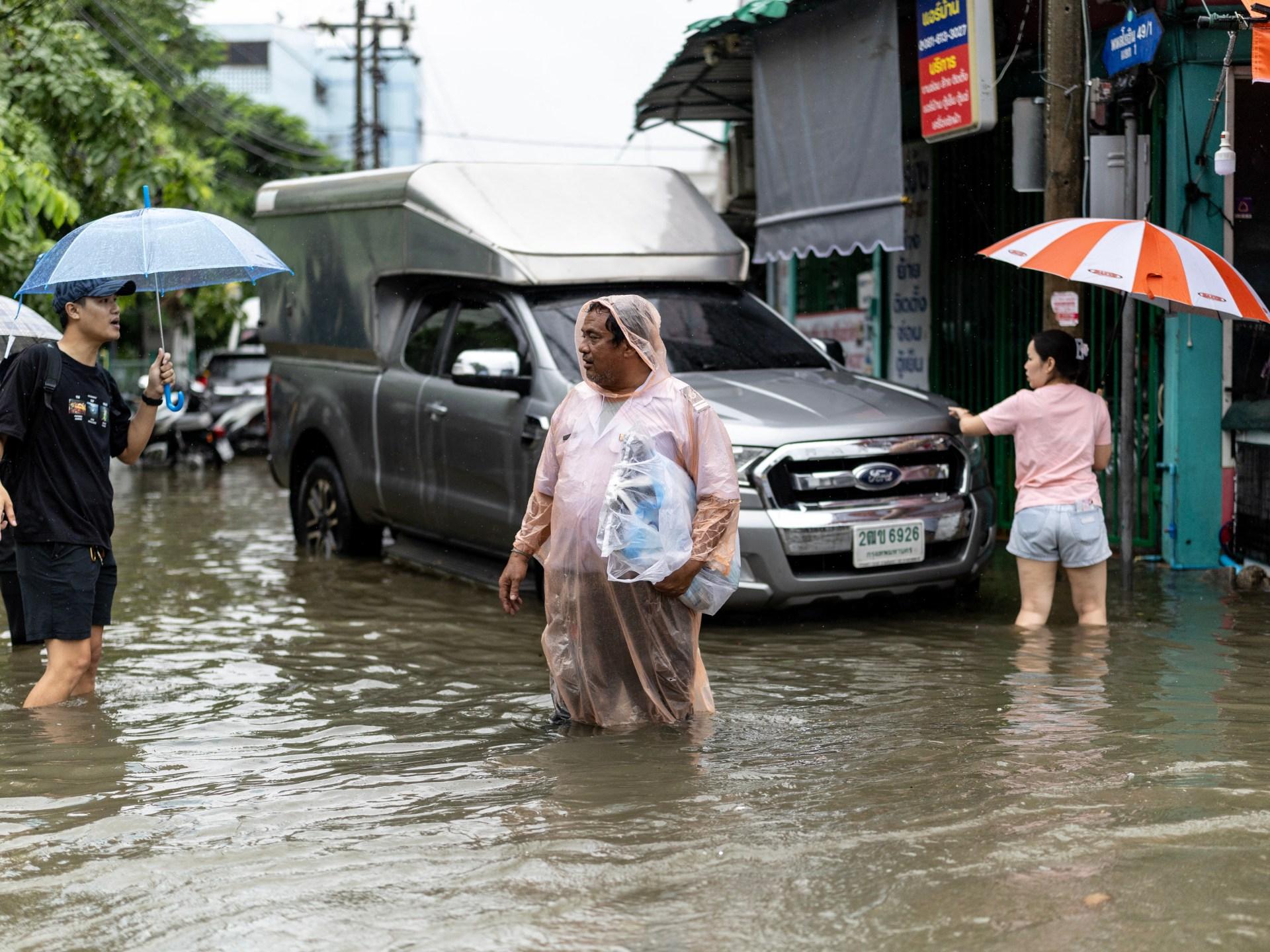
A series of heavy rains that lasted for several days in the Thai capital, Bangkok, caused widespread flooding that submerged homes and roads, according to a report published by Al Jazeera. This sudden rise in water levels forced authorities to evacuate approximately 4,900 people and relocate them to safe shelters to protect their lives from the risk of drowning.
According to the Bangkok Metropolitan Administration (BMA), water levels remained very high in the city's canal network on Sunday morning, as authorities are currently working to accelerate water drainage operations to mitigate the severity of the disaster. However, the administration warned that more rain is expected throughout Sunday in Bangkok and surrounding provinces before gradually receding on Monday.
A state of flood emergency was officially declared for Bangkok on Saturday after the city endured approximately 48 hours of continuous heavy rainfall. The Meteorological Department confirmed that some areas of the city recorded more than 330 mm of rain between Thursday and Sunday, representing a massive amount of water in a short period.
Preliminary estimates indicate that the floods affected around 52,000 households across various districts of the capital, creating a temporary housing crisis that requires urgent intervention. Experts fear that the impact of these natural disasters will continue if weather conditions do not improve quickly, especially given the increasing severity of extreme weather phenomena in recent times.
Analysis & context
Analysis & Context
From an analytical perspective, these floods are part of an increasing pattern of severe weather events facing the world due to rising global temperatures. Scientists consistently warn that fossil fuel emissions will inevitably lead to increased intensity and frequency of such extreme events in the future, making coastal cities and capitals more vulnerable.
In a broader context, Bangkok faces unique geographical challenges that make it highly sensitive to climate change, as the city is situated on a complex network of waterways that it relies on for sewage and agricultural drainage. Rising water levels in these canals are not merely a temporary problem but reflect a serious interplay between global climate change and outdated local infrastructure that was not designed to withstand such immense pressure.
United Nations reports show that major Asian cities are the most vulnerable to climate change impacts, combining high population density with low-lying terrain. This makes evacuating thousands of residents a necessary measure despite its significant economic and human costs, highlighting the urgent need for massive investments in climate-resilient infrastructure.
Furthermore, reliance on accurate weather forecasts has become crucial for disaster management, as evacuation plans depend on precise predictions of rainfall volume and duration. However, increasing uncertainty in climate prediction models makes it difficult for authorities to plan effectively against such recurring and sudden crises.