Sourced fact
The News
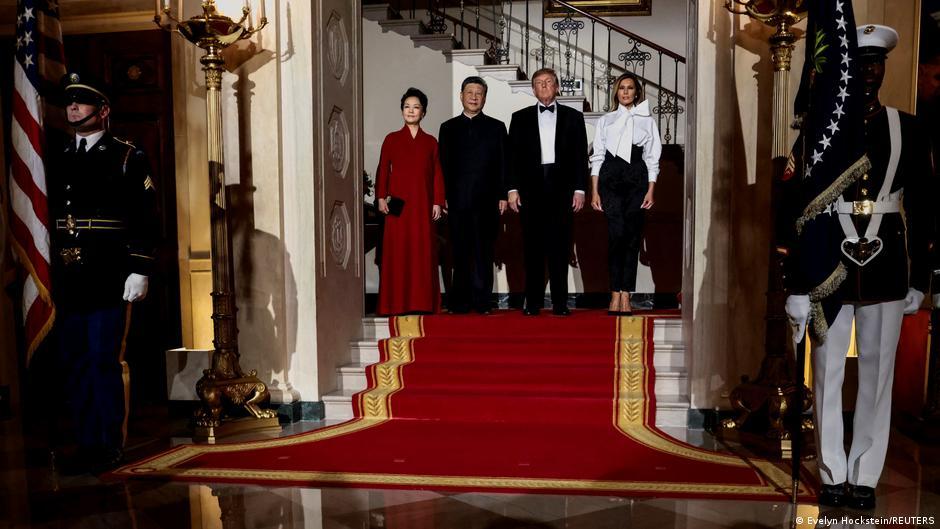
The three-day visit of Chinese President Xi Jinping to the United States concluded without achieving breakthroughs on key contentious issues, despite mutual optimism between the leaders. During a tea ceremony held at the White House with Xi and both couples, President Donald Trump announced that significant progress had been recorded in economic and political relations. In media statements, Trump emphasized that the meeting was an occasion of friendship, strength, and success for both nations, noting that much had been accomplished and more would be achieved in the future.
Speaking through his translator at the White House, Xi expressed expectations for two further meetings with Trump this year: the first at the Asia-Pacific Summit in China and the second at the G20 Summit in Florida, USA. The Chinese President added that bilateral relations must be grounded in strategic stability based on respect, fairness, and reciprocity, confirming that both sides agreed to add new content to their partnership. He also invited Trump and his wife to visit China in the future, to which Trump responded that they would visit and converse extensively in the near future.
Trump relayed a conversation he had with Xi regarding the war in Iran, stating that they discussed the matter during Xi's tour of US national archives. The US President also expressed optimism about reopening the Strait of Hormuz, believing both sides would work excellently to achieve this goal. In another context, US Trade Representative Jamison Greer clarified that the two parties agreed to exclude certain key goods from trade conflicts and open markets for American agricultural products and medical devices in exchange for importing non-sensitive Chinese consumer goods.
The two leaders continued their tour of US national archives, visiting historical documents such as the Declaration of Independence, the Constitution, and the First Amendment. Following the tour, it was scheduled for Xi to depart Washington after attending a lavish state dinner attended by prominent American technology officials. However, according to reports from Deutsche Presse-Agentur (DPA), analysis indicates that the summit did not record tangible progress on files concerning trade tensions or AI regulation despite official celebrations.
On another front, hundreds of protesters gathered in downtown Washington to protest against Xi Jinping's visit, calling for religious freedom and autonomy for regions such as Tibet, Xinjiang, and Hong Kong. Demonstrators also urged China not to interfere in Taiwan affairs during the visit, which received extensive official reception from President Trump and his wife, Melania Trump.
Analysis & context
Analysis & Context
From an analytical perspective, this visit marks a new phase in US-China relations after decades of escalating tensions. It represents Xi Jinping's first official visit to Washington in over a decade, aiming to recalibrate the strategic relationship between the world's two largest economies, with conversations focusing on critical files such as the Middle East, Ukraine, and the Korean Peninsula.
In a broader context, the participation of major technology companies in the official ceremony reflects a notable shift in US political dynamics, where these corporations have become prominent political actors. Furthermore, the persistence of trade tensions despite negotiations suggests the difficulty of reaching a comprehensive agreement that satisfies both parties without essential concessions from either side.
Reports indicate that the protests held outside the White House reflect divergent opinions regarding this visit; while some advocate for minority rights in China, others emphasize the importance of economic cooperation. This divergence highlights the diplomatic challenges leaders face in managing complex international relations.
Finally, the announcement of two additional meetings before the end of the year reflects both parties' desire to maintain open communication channels despite their fundamental differences.