Sourced fact
The News
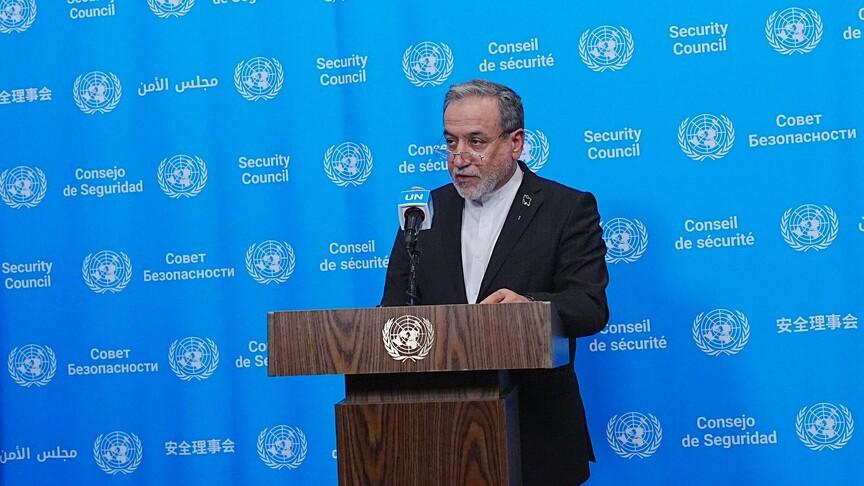
On Sunday, Iranian Foreign Minister Abbas Aragchi announced in an interview with NBC's "Meet the Press" that Tehran is prepared for diplomacy with the United States but is "fully ready" to respond militarily if Washington launches new attacks. This statement comes amid escalating tensions following Iran's closure of the Strait of Hormuz.
Aragchi stated that Iran has proposed a seven-day ultimatum to reopen the strait, contingent upon specific actions by Washington, including ending the war, unfreezing Iranian assets, lifting sanctions, and permitting the export of Iranian oil. The minister clarified that Tehran would reopen the strait on the sixth day of the proposal while resuming negotiations toward a final agreement on the seventh day, asserting that the United States is capable of executing these steps within four or five days.
Aragchi further emphasized, "We are ready for diplomacy and we are also ready for war at the same time," underscoring that the decision to escalate militarily or engage in negotiations lies with President Donald Trump, who officially rejected the proposal according to the minister, despite Tehran awaiting a formal response through intermediaries.
Additionally, Aragchi refuted claims of Iran violating the June agreement, noting that Washington could have utilized the dispute resolution clause in the interim accord instead of launching airstrikes if it believed Tehran had breached its terms.
Regarding Iran's nuclear program, Aragchi affirmed that enrichment aims for peaceful purposes, including medical applications, and expressed Iran's willingness to negotiate over 60% enriched uranium as part of a future confidence-building phase. The minister also noted that the Iranian leadership does not appear publicly in video clips since March due to security concerns linked to American threats, clarifying that the ministry receives feedback, orders, and opinions from the Supreme Leader without any competing centers of authority.
Analysis & context
Analysis & Context
From an analytical perspective, Aragchi's stance reflects the delicate balance Iran seeks to maintain between preserving its military options while not entirely excluding peaceful solutions. Linking the reopening of the strait to specific political conditions suggests that Tehran views military action as a reactive measure rather than a permanent strategic priority.
In the broader context, the Strait of Hormuz represents a critical chokepoint for the global economy, through which a significant portion of world oil trade flows. Any closure of the strait would have catastrophic implications for the global economy and energy security. Historically, the region has been a theater of recurring tensions between major powers and regional actors over control of resources and maritime routes.
Furthermore, Aragchi's rejection of full reliance on Trump signals that Iran distrusts any U.S. administration regardless of its political identity or stated foreign policy. This position reflects a long history of perceived betrayal and agreements violated after signing in the region.
Finally, referencing the Iranian nuclear program as an issue to be resolved through negotiations rather than war underscores Iran's preference for diplomatic channels even during periods of intense tension. The separation of nuclear issues from the strait in the proposal highlights an Iranian strategy of compartmentalizing files and simplifying negotiations on each separately.