Sourced fact
The News
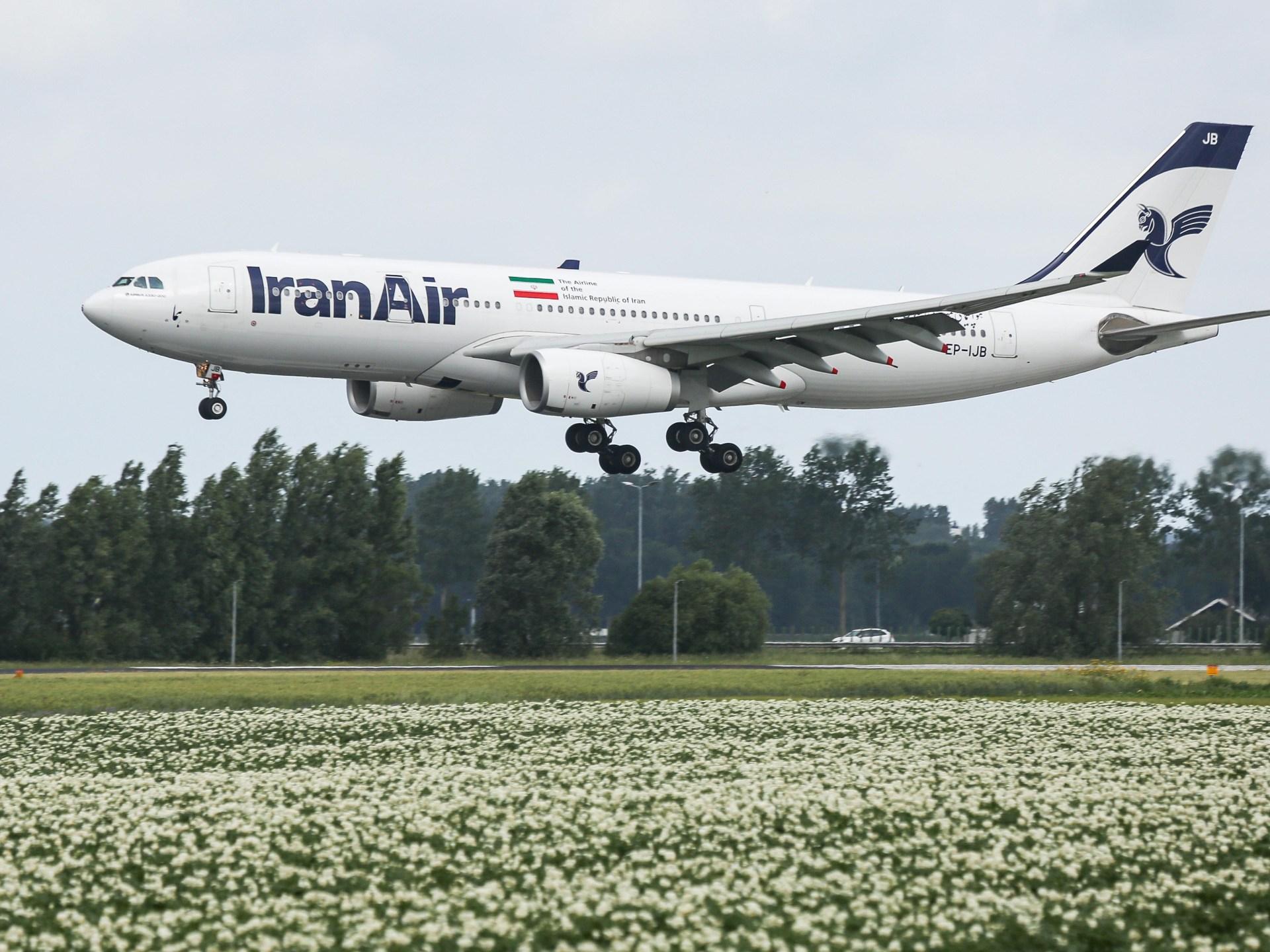
Iran warns of launching retaliatory strikes against neighboring countries if they impose new US sanctions aimed at preventing Iranian airlines from operating internationally, threatening to cause further disruptions in an already nearly paralyzed airspace since the start of the US-Israeli war on Iran on February 28. A senior Iranian official stated that Tehran will not tolerate any country participating in Washington's economic campaign against Iran, warning of severe consequences for the aviation sector in the region.
Mohsen Rezaei, head of Iran's National Security Council, said his country would strike any state cooperating with US sanctions or joining their ventures, clarifying that airports in those countries would be unable to operate flights to Iran and would not function normally. The Iranian official added that these warnings come in response to US threats to hold foreign companies and intermediaries accountable for helping Iranian airlines operate, as the US Treasury Department has sanctioned 27 Iranian companies, including Mahan Air, accused of ties to the Islamic Revolutionary Guard Corps.
Rezaei's warning coincided with the cancellation of several international flights after Iran announced suspending all its flights to the UAE, while Azerbaijan and Georgia also suspended their flights on Wednesday, along with halting flights from Baghdad and Muscat. Despite some routes remaining open with Turkey and China, many others were also canceled, highlighting how US-Iranian confrontations draw third-party countries into the conflict indirectly, according to experts.
US sanctions threaten fuel companies and ground service providers by cutting them off from the US financial system if they continue serving Iranian aircraft, making providing fuel or tickets legally and economically risky. Negar Mortazavi, a senior fellow at the Center for International Policy in the United States, noted that this warning represents an attempt to force neighbors to refrain from commercial cooperation with Iran and consider it participation in the American pressure campaign.
Although Iran has not specified how it intends to implement its threats—whether diplomatically or militarily—it has previously demonstrated its ability to disrupt Gulf airspace by launching missiles and drones that struck multiple countries' airports, forcing many to temporarily close their airspace. Wolfgang Pusztai, a former defense diplomat and security analyst, warned that Iran may not attack airports again because the practical impact of sanctions could be limited due to some companies continuing to work with countries like Turkey, Pakistan, and China, which may not enforce US sanctions strictly.
Pusztai also noted that the biggest impact of these measures might be psychological for Iranians witnessing the disappearance of international flights directly, enhancing their sense of isolation and pushing Iran toward firm responses. He added that the flight ban is immediately visible compared to other financial sanctions, but experts warn against expecting these sanctions alone to break Tehran's will or change the course of the conflict.
Analysis & context
Analysis & Context
Analytically, this situation represents an Iranian attempt to deter countries from participating in Washington's economic pressure campaign, especially after tensions escalated following the start of the war between Israel and Iran on February 28. Analysts believe Tehran does not view compliance with US sanctions as a neutral commercial decision but rather as participation in a political campaign against Iran, thereby intensifying regional polarization.
In the broader context, Iran's threat of retaliation is not precisely defined; Rezaei did not clarify whether the response would be diplomatic, economic, or military, leaving the situation open to various interpretations. While Iran lacks the authority to close another sovereign state's airspace, it could use other tools such as pressuring fuel companies and ground service providers to increase financial risks for those cooperating with US sanctions.
Experts indicate that the actual impact of these measures may be practically limited, as Iran maintains air relations with countries like Turkey, Pakistan, and China, which may not apply US restrictions with the same rigor. Additionally, the psychological effect on Iranian citizens of the immediate disappearance of international flights could outweigh direct material impacts, as they feel a heightened sense of global isolation instantly and visibly.
Finally, estimates suggest that the aviation sector in the Middle East faces losses exceeding $4.3 billion in 2026 due to the war and imposed restrictions. Direct bombing of some airports in Gulf countries temporarily disrupted their services before gradually resuming them, highlighting the region's sensitivity to any new developments affecting international air travel.