Sourced fact
The News
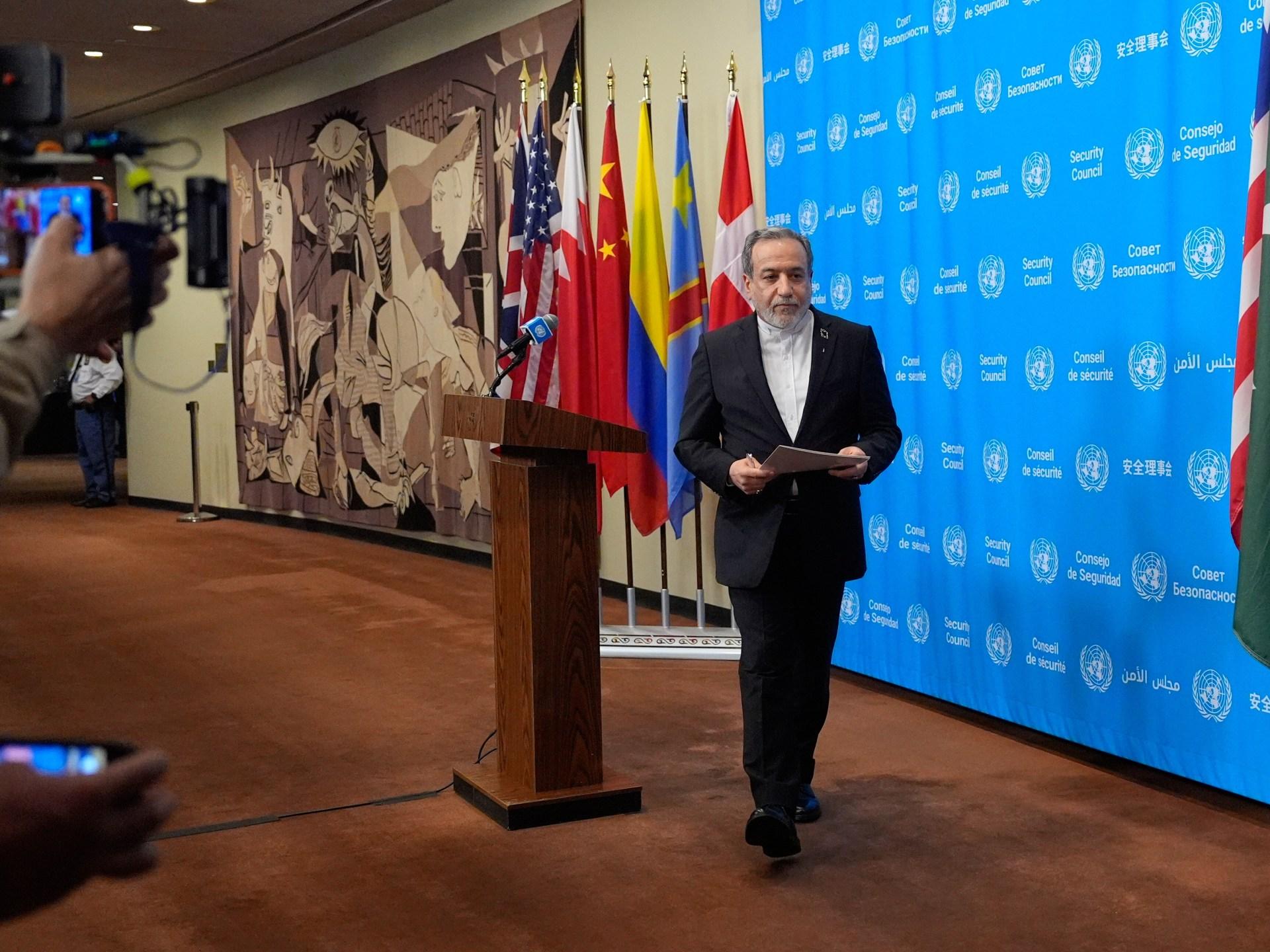
Iran officially announced the submission of a seven-day roadmap to end its war with the United States and is now awaiting Washington's response, according to Iranian Foreign Minister Abbas Aragchi, who revealed the plan to journalists outside the UN Security Council on Friday. The plan includes lifting the naval blockade on Iranian ports and releasing frozen assets worth $12 billion in exchange for reopening the Strait of Hormuz, through which a significant portion of global oil flows.
Aragchi stated that initial steps would take four to five days, while final talks regarding the Iranian nuclear program would begin on the seventh day after Washington accepts the plan. In return, Iran has promised to reopen the strait, which has become a key pressure point for Tehran since its closure during the war that has now entered its seventh month.
Reports from The Wall Street Journal indicate that US President Donald Trump rejected the offer and privately doubts Iran's ability to meet Washington's demands, anticipating a new bombing campaign following mid-November elections. Iran received support from Qatar as a key mediator, whose foreign minister confirmed speaking with Iranian President Masoud Pezeshkian about de-escalation and conditions for renewed dialogue.
US Special Envoy Steve Witkoff described his meeting with Aragchi at the UN General Assembly as "lengthy" and hopeful that it would be constructive, while the Iranian leader affirmed that the choice now lies with the US to either end the war or continue it. However, analysts remain skeptical, noting that the core of the position has not changed and that Washington rejects returning to the framework agreed upon in June, which collapsed after weeks due to technical disagreements over shipping control in the Strait of Hormuz.
Reports suggest the new plan closely resembles the failed memorandum of understanding aimed at stopping hostilities in Yemen, Lebanon, and the rest of the region, but previous technical disputes over maritime rules hindered its implementation. Aragchi hopes to reach an agreement before the US elections, despite no expectation of major progress until November, emphasizing that Iran will not surrender its sovereign rights under any pressure or threat.
Analysis & context
Analysis & Context
From an analytical perspective, this plan proposed by Iran closely resembles the memorandum of understanding signed between Tehran and Washington on June 17 last year under the patronage of Qatar and Pakistan, which collapsed within weeks due to technical disagreements over shipping control through Hormuz. At the time, President Trump described the agreement as "terminated" after Iran began firing at ships accused of not respecting licensing rules.
In the broader context, tensions in the Middle East remain high, especially with continued intermittent US airstrikes on Iranian territory and coastal areas in response to escalation. It appears the US side resists returning to the framework agreed upon in June, while Iran seeks to maintain strategic gains achieved during the war.
On another front, Iranian Foreign Minister Aragchi met with US Special Envoy for Peace Steve Witkoff on Tuesday at the margins of the UN General Assembly, where Witkoff described the meeting as "lengthy" and expressed hope that the talks would prove constructive and promising. However, analysts such as Cyrus Shafighi from the Geneva Institute for Graduation point out that the general atmosphere has not fundamentally changed and that Iran aims to retain the leverage gained during the war.
Additionally, Iranian President Masoud Pezeshkian confirmed to Fox News this week that ending the war is now solely up to the United States, stating that America must choose whether it wants to end this conflict or not. Meanwhile, the Trump administration stated it is conducting "positive and constructive discussions" through intermediaries, according to a White House official speaking to CNN.
Finally, Qatar played a pivotal role as a key mediator in the conflict, with its foreign minister confirming he met Iranian President Pezeshkian on Friday to discuss escalation of tensions and conditions for resuming dialogue, highlighting the importance of regional diplomatic efforts in resolving international crises.