Sourced fact
The News
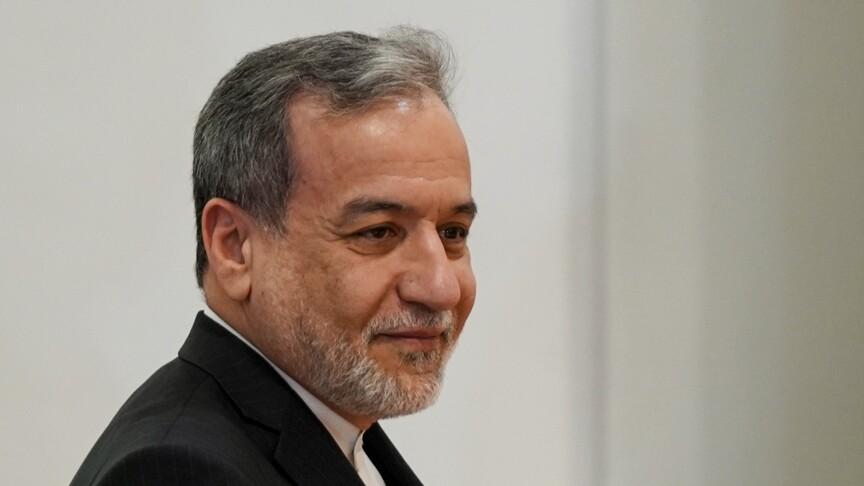
The Iranian Ministry of Foreign Affairs announces that Tehran continues to await the final official response from the United States regarding its proposal to reopen the Strait of Hormuz, following a review of President Donald Trump's initial reply, which was deemed insufficient. According to Iran's official news agency (IRNA), as reported by Foreign Minister Abbas Araghchi in Istanbul on Saturday, September 27, 2026, Tehran remains waiting for Washington's final position to be conveyed through the relevant intermediaries.
Araghchi clarified that the Iranian delegation presented its conditions for reopening the strait during meetings in New York, where these terms were explained to the intermediaries who subsequently relayed them to the American side. The minister stated that Iran listened to President Trump's initial reply, but no specific details have been conveyed by the intermediaries so far, noting that the final decision will be made based on the position transmitted through official diplomatic channels.
Araghchi emphasized that any progress toward reopening the strait or advancing negotiations is entirely contingent upon meeting Tehran's conditions, which he described as clear and specific. The new proposal includes a roadmap to reopen the strait within one week, requiring the release of frozen Iranian assets, the lifting of oil sanctions, and the end of the naval blockade on Iranian ports before commencing the reopening of this strategic waterway.
In another development, President Donald Trump rejected Iran's proposal last Friday, describing its conditions as unacceptable despite Tehran's readiness to reach an agreement. Speaking to media outlets from the White House, Trump stated that the United States possesses "full control" over the strait and accused Iran of seeking an agreement because it is "losing badly," while Araghchi reaffirmed that the only viable solution is a diplomatic one that guarantees dignity, justice, and the rights of the Iranian people.
Analysis & context
Analysis & Context
From an analytical perspective, Foreign Minister Abbas Araghchi's stance represents a continuation of Iran's policy of linking any normalization of trade relations to a comprehensive resolution covering core issues such as sanctions and frozen assets. The requirement to reopen the strait within a week after meeting these conditions reflects Tehran's desire to demonstrate diplomatic flexibility while upholding the principle of "dignity," which it enshrines in its official rhetoric toward any concessions that might be imposed under pressure.
In the broader context, the Strait of Hormuz remains a vital artery for the global economy, as a significant portion of Iran's and the world's oil exports pass through it, making any decision regarding its closure or reopening of major geopolitical significance. Trump's rejection of the proposal, despite Washington's assertion of "full control," indicates that the dispute has moved beyond technical matters to become tied to a firm American political stance toward Iran's nuclear and regional policies since the tenure of former President Donald Trump.
Iran continues to assert that the choice now lies with the United States, reflecting a shift in Tehran's strategy from relying on direct military threats to using diplomacy as a means of pressure to achieve political and economic gains. The continuation of negotiations via intermediaries while maintaining non-negotiable terms highlights the complexity of the regional and international landscape, which oscillates between diplomatic solutions and ongoing security threats in the region.