Sourced fact
The News
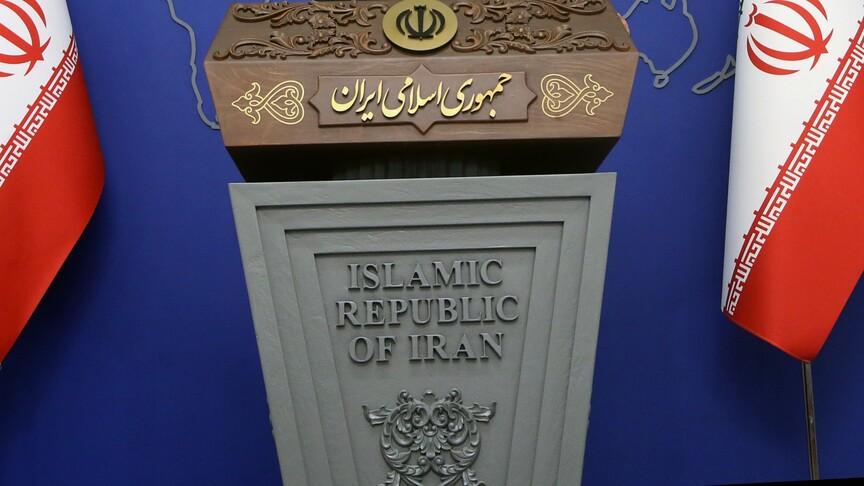
On Friday, Iran's Ministry of Foreign Affairs issued a definitive rejection of the allegations leveled against it by the Colombian government, stating that Bogotá's decision to sever diplomatic ties violates the principle of mutual respect and harms the interests of both nations. According to Anadolu Agency reports, Tehran described these accusations as "unwarranted" and firmly denied any claims regarding the involvement of its armed forces in illegal activities.
In a direct response to Colombia's stance, Iran's Ministry of Foreign Affairs accused Bogotá of acting under the influence of the United States and Israel, labeling them the "Zionist regime." The ministry also highlighted that the decision to sever ties was taken unilaterally based on external pressure rather than substantive reasons.
Furthermore, Tehran accused the Colombian government of significant complicity with drug trafficking groups, asserting that Colombia is part of a "drug terrorism" network spanning the Americas. The ministry pointed to the seizure of 55 kilograms of cocaine in Tehran, confirming that the shipment was smuggled by a network linked to influential individuals in Colombia.
Iranian officials called on Colombian authorities to cooperate with Tehran to identify those responsible for smuggling these shipments instead of taking punitive measures such as severing diplomatic relations. The ministry reaffirmed Iran's readiness to take "necessary steps" to protect its national interests in response to what it described as an "unfriendly and unjustified stance."
On its part, Colombia confirmed that its decision was based on regional and international security concerns, the fight against cross-border crime, and allegations regarding links between the Iranian government and terrorist and drug trafficking groups. The accusations also included human rights violations in Iran, attacks on countries outside the Middle East conflict, the closure of the Strait of Hormuz, and hindering the efforts of the International Atomic Energy Agency.
Analysis & context
Analysis & Context
From an analytical perspective, this escalation marks a sharp diplomatic turning point between Tehran and Bogotá, where relations shifted from tension to the formal severance of diplomatic ties, despite consular relations remaining intact. This move indicates a rapid deterioration in mutual trust and an intensification of geopolitical disputes that transcend direct regional borders.
In the broader context, this conflict reflects the complex interweaving of ideological and geopolitical struggles in the region and the world. Iran seeks to portray itself as a counterforce to American and Israeli influence, while Colombia attempts to justify its position through drug combat and regional security efforts.
Historically, relations between Iran and the United States have been strained since the 1979 Islamic Revolution, meaning any American or Israeli move directly impacts Iran's relationships with other nations like Colombia. Additionally, the issue of the Strait of Hormuz and Iran's nuclear activities remain key axes in international diplomatic discourse, influencing decisions by Western and Latin American countries.
Regarding the concept of "drug terrorism," it combines drug smuggling with its use to fund terrorist or illegal activities—a narrative Iran is attempting to link to the Colombian government to justify its defensive stance and shift blame to the other party in this diplomatic equation.