Sourced fact
The News
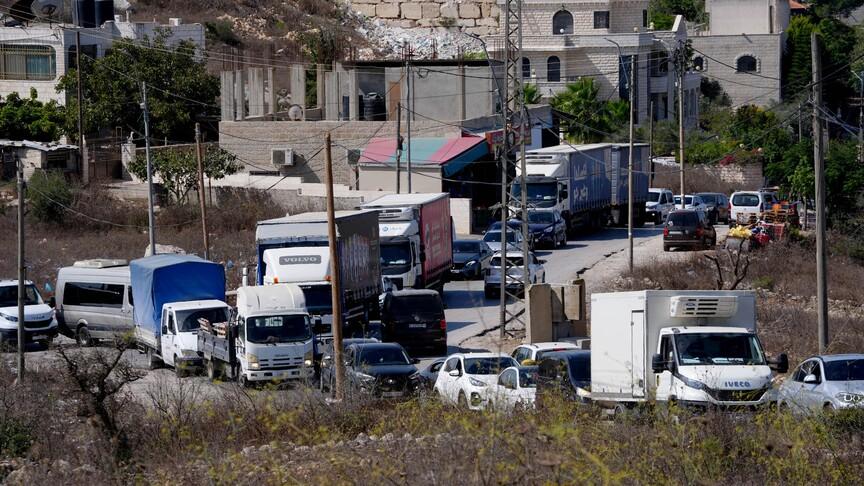
The Anadolu Agency reported that strict Israeli military closures around the cities of Ramallah and Al-Bireh have caused thousands of Palestinians to be delayed for hours, significantly impacting civilian life and mobility between nearby towns and villages. According to reports, checkpoints like Atara and Ein Sinia saw major traffic jams, with some Palestinians reaching their homes after midnight.
Malik Anas, a resident returning from Ramallah to Qalqilya, told the Anadolu Agency, "I waited for around six hours before the Israeli forces reopened the checkpoint after midnight." He added that thousands of cars were lined up there, while others arrived home after midnight following long waits and diversions.
The agency noted that these measures also affected access to medical care. Palestinian activist Eyad Ghafari documented the case of a patient who was transferred from his car to an ambulance at the Atara checkpoint but could not cross it. Ghafari said, "The Israeli army has deliberately closed the entrances to Ramallah for several days, preventing residents from moving around by car."
Palestinians linked these stringent measures to Jewish holidays, while Israel claims such measures are taken for security reasons. The agency reported that the closures impacted several major roads connecting Ramallah to the occupied West Bank. The Palestinian news agency WAFA reported that checkpoints Atara, Ein Sinia, and entrances to Abu Dis and Nabi Salah were closed, along with security restrictions in Yabroud and Jubeih.
According to the Palestinian Committee for the Protection of Human Rights and the Environment, the Ramallah and Al-Bireh governorate has 160 checkpoints and restrictions, the second highest after Hebron with 221 checkpoints. The committee recorded 942 checkpoints and restrictions throughout the West Bank. The UN Office for the Coordination of Humanitarian Affairs (OCHA) noted that such obstacles force Palestinians to travel longer routes and impact access to workplaces, schools, hospitals, and other essential services.
Analysis & context
Analysis & Context
From an analytical perspective, these Israeli measures are linked to Israel's need to ensure security in the occupied territories. However, Palestinians view these measures as part of a movement restriction policy aimed at limiting the lives of Palestinians. In a broader context, such measures increase tensions in the region and significantly impact the lives of Palestinians. They also disrupt access to essential services like healthcare, education, and work, exacerbating humanitarian suffering.