Sourced fact
The News
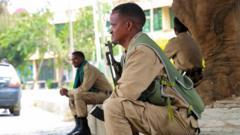
The Ethiopian Armed Forces announced today that they have repelled attacks launched by Tigrayan forces and their allies in parts of northern Ethiopia. This is the first statement issued since clashes erupted on Wednesday. The army reported that fighting began in an area belonging to the Amhara region near the border with Tigray, causing heavy losses to the enemy and seizing weapons. Tensions between the federal government and Tigrayan leaders have escalated sharply over recent days, raising fears of a return to a devastating civil war.
A spokesperson for the army said that the armed forces inflicted severe casualties and quickly regained control of strategic areas after the Popular Front for the Liberation of Tigray (TPLF) seized three airports from federal police forces on Wednesday. The alliance has not addressed these military claims, while BBC News could not independently verify them or send reports from inside Tigray and surrounding areas.
Sources added that there are unconfirmed reports indicating that TPLF forces launched attacks in neighboring regions of Afar and Amhara. Amanuel Assefa, deputy head of the alliance, stated that we are now living in a full-blown war state. These escalations come after months of strained relations between Prime Minister Abiy Ahmed and Tigrayan authorities, which previously engaged in a devastating war from 2020 to 2022 that ended with an EU-mediated peace agreement.
BBC News reported that the TPLF alliance announced a partnership with six other armed groups to topple the government, while all Ethiopian Airlines flights to Tigray were cancelled following the takeover of the airports. A resident of Mekelle, the main city, stated that local forces seized the airport at the beginning of Wednesday, while the city did not witness direct clashes like during the previous war.
An unnamed resident of Mekelle, who requested anonymity due to safety concerns, explained that the situation in the city is relatively calm except for general anxiety stemming from the severe economic crisis the country is facing. He noted that people are living in sorrow due to recent hardships, as the government has withheld civil servants' budgets for several months, leading to bank liquidity shortages.
The resident stated that reliance on mobile money transfers has become dangerous due to the risk of communication disruptions, leaving residents at great risk due to the lack of nearly any cash. He added that people are restricting their movements in the city, which has become completely quiet, resembling an unofficial curfew zone resulting from the outbreak of war.
Analysis & context
Analysis & Context
From an analytical perspective, this new escalation poses a significant threat to Ethiopia's stability, which suffered from a devastating war lasting from 2020 to 2022 that concluded with a European-mediated peace agreement. Despite the end of that war, mutual accusations between both parties of violating the agreement threaten to return the region to chaos, leading to an imminent famine according to estimates by the African Union mediator, who estimated the number of deaths at around 600,000 people.
In the broader context, reports indicate a new alliance formed by the Popular Front for the Liberation of Tigray with six other armed groups aimed at overthrowing the government, adding a new layer of complexity to the conflict. Ethiopian Airlines was forced to cancel all flights to Tigray after the front seized the airports, reflecting the economic and political isolation currently facing the region.
The situation in Mekelle, the main capital city of Tigray, appears different from other areas; one resident described the city as relatively calm except for general anxiety caused by the acute economic crisis. Residents are suffering from a severe shortage of liquid cash due to bank closures and withholding of budgets for civil servants, forcing them to rely on mobile banking services that may fail with communication disruptions.
Citizen Fitsum, who spoke under his own name to protect his identity, stated that people are living in extreme anxiety due to the severe economic difficulties they have faced over the past seven or eight months. Restrictions on movement have been imposed in the city, making it resemble a curfew zone, threatening a humanitarian collapse if fighting continues without an urgent political solution.