Sourced fact
The News
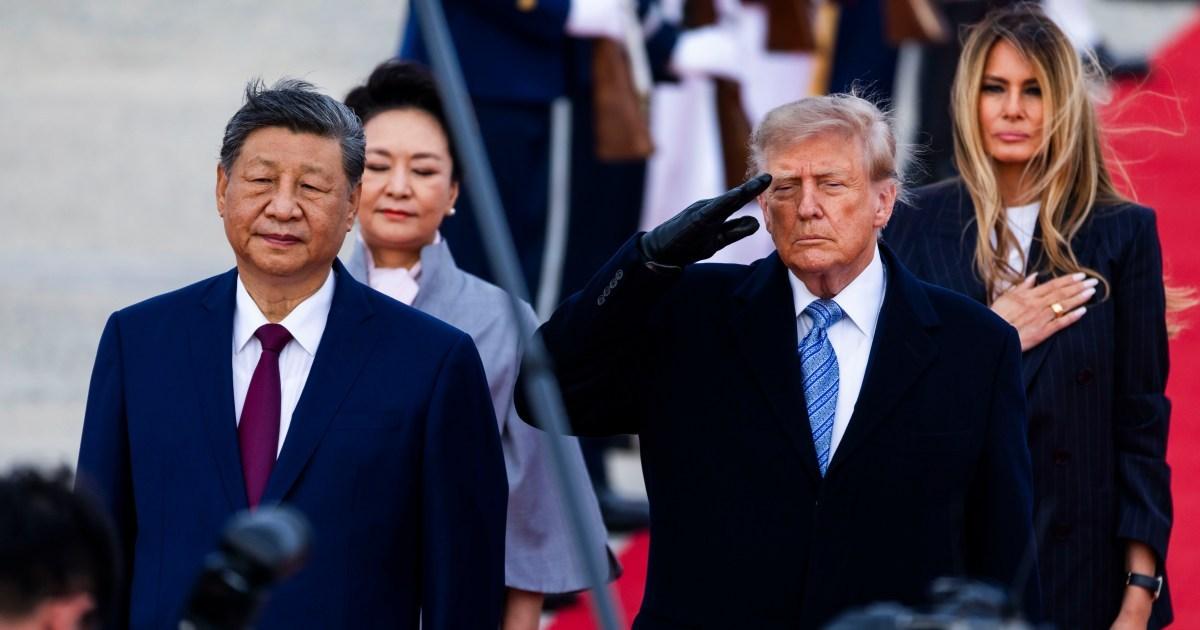
US President Donald Trump has announced the extension of the commercial truce with China for an additional two months, occurring within the framework of a formal visit by Chinese President Xi Jinping to Washington. This visit marks the first of its kind for a Chinese leader to visit the United States in 11 years, while it was the third face-to-face meeting between the two leaders in less than a year. The arrival of the Chinese president coincided with the US administration's announcement extending the ceasefire that began in October 2025, which included an agreement for China to purchase more American soybeans and delaying a ban on rare earth metal exports until January 10 next.
It is worth noting that relations between the two countries were extremely tense at the start of Trump's second term in January 2025, as Washington imposed tariffs on Chinese goods and accused Beijing of facilitating the flow of fentanyl into America. China responded by imposing its own tariffs and restricting exports of rare metals vital for modern technology, pushing tariffs close to 150 percent before a temporary suspension was enacted to allow for talks. This summit followed the Asia-Pacific Economic Cooperation (APEC) summit in South Korea, where the first ceasefire was announced, followed by another meeting in May when Trump visited Beijing.
Despite apparent optimism expressed by US Treasury Secretary Scott Bessent regarding the possibility of achieving a larger deal, analysts have warned that this extension does not represent a bridge to a comprehensive agreement but rather a temporary sandbag placed before a structural flood. Eitan Tangen, a senior fellow at the Governance Institute in Berlin, stated: "The two-month extension is not a bridge to a major deal but a temporary sandbag stopping a structural flood," noting that this ceasefire exceeds nothing more than a "commercial theater piece" aimed at improving the image ahead of the upcoming US midterm elections.
Tangen added that Trump's success in January will not be measured by what was resolved but by the ability of the knot to remain tied without killing the economy, while Professor Philippe Locquet from France's ESSEC School viewed shortening the duration of extensions as clearly indicating a lack of common ground on many issues. He also described the outcome as very bad for the United States, noting that nothing has been resolved and the hanging Dantesian swords still threaten the US capital, considering Trump's policy toward China as short-sighted and raising many doubts in the world.
On another front, Sheng Chonghao, a fellow at Tsinghua University's Center for Security and Strategy, viewed this extension as a useful temporary step showing both parties' desire to maintain easing recent tensions. However, he pointed out that sustainable agreements require mutual benefits and greater transparency in policies, clarifying that additional purchases cannot compensate for uncertainty regarding tariffs, technology restrictions, and market access. Tangen also warned that the collapse of artificial intelligence company valuations could trigger a huge financial wave making technological decoupling meaningless if the world drowns in an economic recession.
It is also worth noting that China recorded a global trade surplus of $1.2 trillion last year despite the trade war, but any escalation could raise import and production costs in America and put pressure on consumer prices. Meanwhile, Washington is playing "economic chicken" with national debt reaching $40 trillion and lacking any financial cushion to absorb a ceasefire collapse, while facing pressures from the costs of its war against Iran, which pushed it into record debts two years ago, as expected.
Analysis & context
Analysis & Context
From an analytical perspective, analysts describe the current situation as mere "commercial theater" aimed at improving the overall image before the upcoming US midterm elections, which Trump fears he might lose due to his unpopular war on Iran and high energy costs. Tangen believes that any success in January will not be measured by what was resolved but by the ability of the parties to keep the knot tied enough to prevent collapse without causing catastrophic damage.
In a broader context, data indicates that tariffs on Chinese goods targeted at the United States remain at 36.5%, while import duties from China to the US reach 31%, creating significant pressure on American consumers and companies. Additionally, the US faces record debt of $40 trillion due to its war on Iran, making any new trade escalation extremely dangerous for the fragile US economy.
Professor Philippe Locquet from France's ESSEC School adds that ceasefire extensions are becoming shorter and shorter over time, indicating a lack of real common ground between the two countries to resolve fundamental disputes. Tangen also warns that the collapse of the artificial intelligence sector could trigger a huge financial wave making decoupling the American and Chinese economies meaningless amid the expected global recession.
On another hand, Sheng Chonghao from Tsinghua University views this extension as a useful temporary step to keep tensions low but emphasizes that sustainable agreements need mutual benefits and greater clarity in policies. Furthermore, a 2026 Congressional Research Service report indicates that any additional rise in tariffs will lead to increased import costs and pressure on profit margins and consumer prices in the United States.