Sourced fact
The News
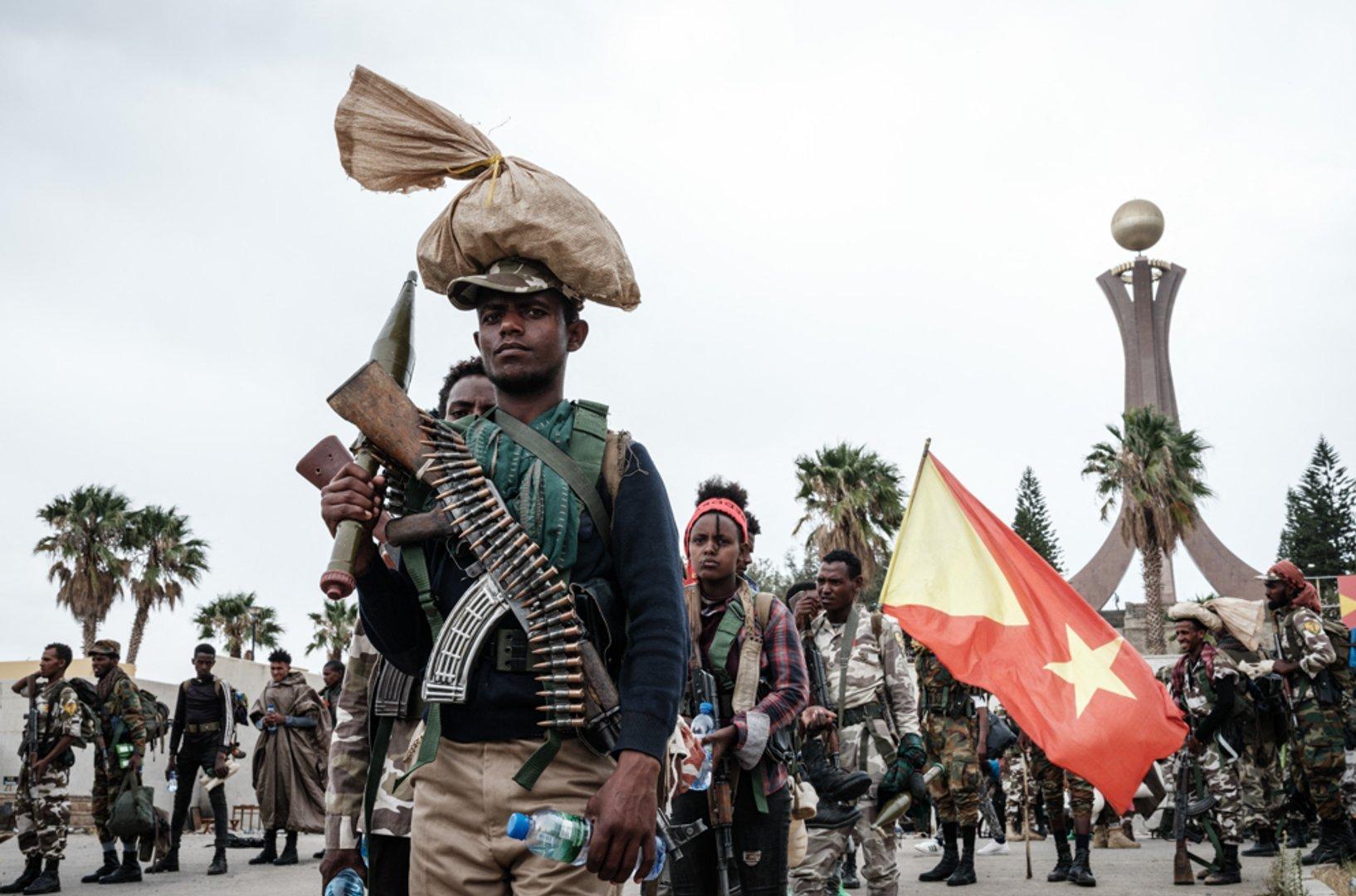
Ethiopia faces the threat of a new civil war after armed groups launched a widespread offensive in its northern regions, where seven factions have allied under the banner "Alliance of Ethiopian People's Forces for Survival" with the aim of ousting Prime Minister Abiy Ahmed's government. Field Commander of the General Staff, Berhane Golja, stated that the military is handling rising tensions with wisdom and caution, accusing Eritrea of providing financial and military support to armed groups he described as an extension of long-standing hostile alliances. Eritrea denied these accusations, stating it fears Ethiopia seeks to occupy its territory to reach the Red Sea.
Fighting has spread to areas bordering Tigray, including Afar and Amhara, where Ethiopian forces killed 272 Tigrayan fighters and wounded 260 others during a counter-offensive in northern Wollo on Thursday. The military indicated it has adopted a strategy of "strategic calm" instead of large-scale military confrontation, noting that popular support for the front in Tigray is waning and its leadership is divided. Internet access was also cut off across northern Ethiopia on Friday following UN warnings about the use of drones against civilians in the region.
Adelem Belma, a member of the Central Committee of the Tigray Liberation Front, described the situation as having turned into "full-scale war," while the front itself confirmed that the federal government has launched a comprehensive offensive involving infantry, mechanized units, and drones. Concerns have intensified that this conflict undermines the Pretoria Agreement of 2022, which ended the civil war in Tigray, especially after Washington recently lifted sanctions on Ethiopia and Eritrea.
Alemayehu Widedemariam, a law professor at Indiana University, stated that the federal government bears a significant share of responsibility for the collapse of the 2022 ceasefire agreement. He pointed out that many provisions of the agreement were undermined by the government itself through imposing restrictions on fuel, services, and currency in Tigray, and its failure to establish the transitional administration it had promised. He added that what was intended as a temporary arrangement became permanent, excluding Tigray from national elections since then.
Analysis & context
Analysis & Context
From an analytical perspective, the military leadership's declaration of a "strategic calm" strategy instead of wide-scale military confrontation reflects an awareness of waning public support for the Tigray Front and fragmentation within its leadership, despite the continued use of drones against civilians, which has raised concerns among the United Nations.
In the broader context, this escalation places the 2022 Pretoria Agreement, which ended a two-year civil war in Tigray, under severe pressure, particularly after Washington lifted sanctions on Ethiopia and Eritrea linked to past war crimes. Alemayehu Widedemariam, the law professor at Indiana University, noted that the federal government bears significant responsibility for the collapse of the agreement due to its imposition of restrictions on fuel, services, and money in Tigray.
Additionally, Ethiopia's president seeks to portray his country as a regional stability force before the UN General Assembly, accusing unspecified external actors of intervening in domestic affairs while highlighting Addis Ababa's role in supporting peace efforts in neighboring Sudan. This shift from relative calm to acute tension signals a risk that the local conflict could evolve into a comprehensive regional war involving armed groups from various regions of Ethiopia.